Quantum photonics is a rapidly advancing field, with colour centres in wide bandgap materials emerging as one of the most promising platforms for single-photon generation and future quantum technologies.
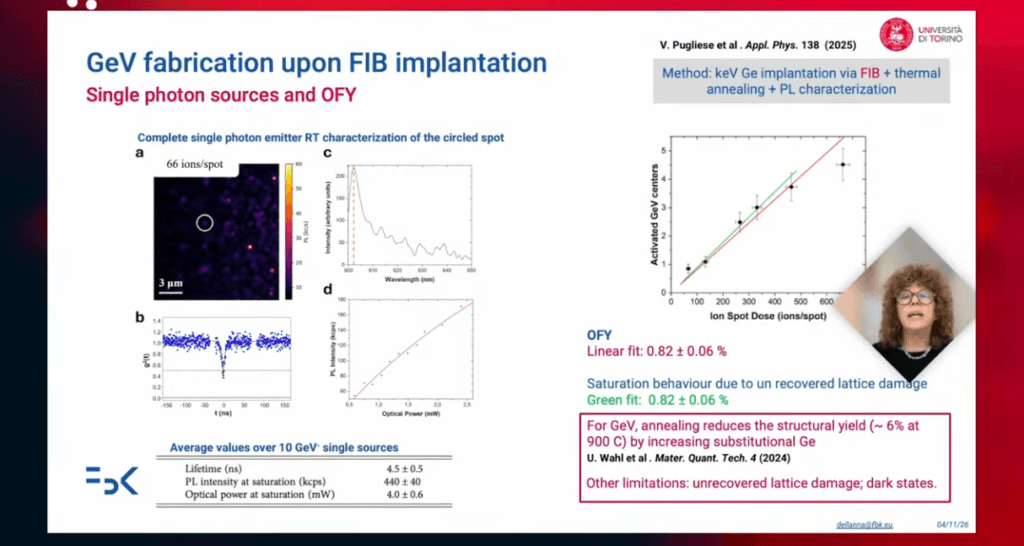
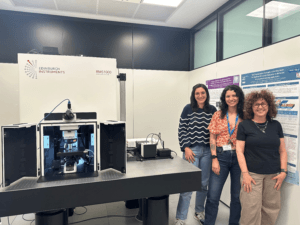
In this Edinburgh Instruments Spectroscopy in Action webinar, Dr Rossana Dell’Anna, Dr Elena Missale, and Dr Elena Nieto Hernandez, researchers from Fondazione Bruno Kessler (FBK), are joined by Applications Scientist Dr Matthew Berry. They demonstrate how photoluminescence (PL) imaging, spectroscopy, and g² photon correlation measurements can be combined to identify, verify, and characterise individual quantum emitters.
Locating a potential quantum emitter is only the first step. Researchers must also determine whether it exhibits the optical properties required for quantum applications. The webinar explored a practical characterisation workflow that combines PL mapping, spectral analysis, and g² measurements to identify individual colour centres and confirm true single-photon emission.
By integrating these complementary optical techniques, scientists can build a complete picture of an emitter’s behaviour, enabling more reliable development of quantum photonic devices.
The presenters also highlight how these measurement approaches can be applied within focused ion beam (FIB) fabricated photonic structures. Using optical imaging and spectroscopy, researchers can precisely align measurements with engineered devices, helping to connect nanoscale fabrication with quantum optical performance.
This capability is particularly important as quantum photonic platforms become increasingly sophisticated, with performance depending on both material quality and device architecture.
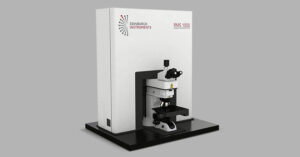
Watch this webinar the full webinar to hear experts explore how advanced spectroscopic techniques are helping researchers overcome key challenges in quantum emitter characterisation. Leveraging instrumentation such as the RMS1000 Multimodal Confocal Microscope alongside g² photon correlation measurements, these workflows provide the detailed optical insights needed to support next-generation quantum technologies.
As demand grows for scalable quantum communication, sensing, and computing solutions, robust methods for identifying and studying colour centres will continue to play a crucial role in advancing the field.