Operando Raman spectroscopy is a powerful way to study batteries and fuel cells under real working conditions. By collecting Raman spectra while an electrochemical experiment is running, researchers can track how materials change as voltage, current and state of charge evolve. This makes it possible to connect structural and chemical changes directly to electrochemical performance.
In this Edinburgh Instruments Spectroscopy in Action webinar, Dr Anna Gakamsky and Dr Matthew Berry introduce Click-and-Go Operando Raman, an intelligent automation approach designed to make these experiments more reliable, reproducible and practical for long measurement protocols.
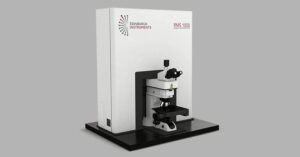
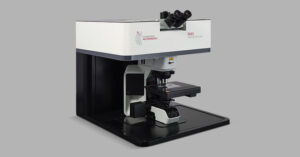
A traditional operando Raman setup often involves two separate systems: a Raman microscope and a potentiostat. Each has its own software, timing and data output. That means the user has to manually coordinate electrochemical control with Raman acquisition, often estimating when to collect spectra after each voltage step.
This manual approach creates several challenges. Synchronisation errors can weaken the relationship between the electrochemical state and the Raman spectrum. Long experiments may require someone to stay with the instrument, making overnight or weekend runs impractical. Once the experiment is finished, researchers are often left with fragmented spectral and electrochemical data that must be manually organised, aligned and processed before it is ready for publication.
The result is a hidden cost in throughput, reproducibility and accessibility. Experiments are limited by working hours and operator availability, while small timing differences can introduce systematic bias between runs.
At Edinburgh Instruments, we’ve created a workflow that allows you to maximise your time without worrying about the samples you are running:
Behind the scenes, the system automatically synchronises the Raman microscope and potentiostat, while continuously maintaining data quality throughout the experiment.
Watch the full webinar to hear Dr Matthew Berry and Dr Anna Gakamsky explain the system architecture, automation strategies and future opportunities for battery and fuel cell analysis.