Skip to content
  • News
  • Events
  • eBooks
  • Blog
  • Careers
  • Contact
  • News
  • Events
  • eBooks
  • Blog
  • Careers
  • Contact
KNOWLEDGEBASE
  • About Us
  • Products

    Fluorescence Spectrometers:

    • FLS1000 Photoluminescence Spectrometer
    • FS5 Spectrofluorometer
    • LifeSpec II Lifetime Spectrometer
    • Mini-tau Lifetime Spectrometer

    Raman Microscopes:

    • RM5 Raman Microscope
    • RMS1000 Multimodal Confocal Microscope

    Transient Absorption:

    • LP980 Transient Absorption Spectrometer

    FTIR Spectrometers:

    • IR5 FTIR Spectrometer

    Lasers and LEDs:

    • Pulsed Lasers
    • Gas Lasers

    Options:

    • Upgrades
    • Customisation
    View All Products
  • Techniques
  • Applications
KNOWLEDGEBASE
  • About Edinburgh Instruments
  • Products
  • Techniques
  • Applications
  • Knowledgebase
  • eBooks
  • News
  • Events
  • Blog
  • Careers
  • Contact Us

RESOURCES

Multi-well Plate Analysis for High-Throughput Raman Spectroscopy

  • March 9, 2026

KEY POINTS

  • Automated high-throughput Raman screening of standard (6–384 well) and custom multi-well plates enables rapid analysis of hundreds of samples in a single experiment.
  • Reduced measurement time and minimal manual intervention improve laboratory efficiency and reproducibility.
  • Integrated acquisition and data analysis within Ramacle® transforms RM5 and RMS1000 Raman microscopes into efficient plate-based screening systems without compromising spectral quality.

Multi-well Plate Function of Ramacle

Performing Raman analysis in a multi-well plate enables high-throughput screening for rapid and efficient sample analysis. Ramacle® software includes a multi-well plate function that enables analysis in both standard (e.g. 6, 12, 24, 48, 96 and 384 wells) and custom plates, turning your RM5 Raman Microscope or RMS1000 Multimodal into a fast and efficient plate reader (Figure 1). 

Multi-well plate analysis on RMS1000 Confocal Multimodal Microscope.

Figure 1. Multi-well plate analysis on RMS1000 Confocal Multimodal Microscope. 


Automated Multi-Well Plate Measurement Workflow 

The multi-well plate module converts a confocal Raman microscope into a high-throughput screening platform while maintaining full spectral performance. 

Within Ramacle®, users can: 

  • Select standard (e.g. 6 – 384 wells) or custom plate formats. 
  • Graphically define wells or regions of plate for analysis. 
  • Set measurement parameters once for automated plate acquisition. 
  • Monitor real-time spectral acquisition and plate progress. 
  • Perform integrated statistical and correlation analysis directly within the software across all wells of the plate. 


Application Example: High-Throughput Raman Analysis of Edible Cooking Oils

This Technical Note demonstrates how the multi-well plate feature in Ramacle simplifies high-throughput Raman analysis and differentiation of edible cooking oils using the RMS1000 Multimodal Microscope equipped with a motorised stage with plate holder insert (Figure 2).   

Multi-well plate stage insert for Edinburgh Instruments Raman microscope

Figure 2. Multi-well plate stage insert for Edinburgh Instruments Raman microscope. 


Four edible oils – olive oil, extra virgin olive oil, sunflower oil and rapeseed oil – were loaded into a 96-well plate, with 300 μL in each well. Each oil was prepared with four replicates; the plate layout is detailed in Figure 3. 

96-well plate layout of edible oil samples.


Figure 3. 96-well plate layout of edible oil samples. 


Setting up Multi-well Plate Measurements in Ramacle

The multi-well plate analysis feature in Ramacle was used to set up the measurement parameters. In the Layout tab, the type of multi-well plate is selected, and the wells are graphically represented in the software (Figure 4). The user then selects the wells to be analysed. This can include the entire plate or individual wells of interest (Figure 4, wells shown in blue).  

Ramacle’s Multi-well Plate Analysis feature. Selecting wells for multi-well plate analysis. 

Figure 4. Ramacle’s Multi-well Plate Analysis feature. Selecting wells for multi-well plate analysis. 


Next, in the Measurement Parameters tab, all Raman parameters can be selected. This includes the laser wavelength, laser power, grating and acquisition time. For the edible oil samples, the optimal measurement parameters are detailed in Table 1. 


Table 1. Experimental Parameters for Raman analysis of edible oils. 

ParameterMeasurement
InstrumentRMS1000
Laser Wavelength532 nm
Laser Power100%
Grating600 gr/mm
Objective Lens10x/0.30 NA
No of Accumulations5
Exposure Time0.1 s


Automated Acquisition and Real-Time Monitoring

During measurements, the progress of the analysis can be followed. Ramacle displays: 

  • Live Raman spectra – Spectra of each well are displayed alongside the multi-well schematic. 
  • Plate position tracking – Current well position can be visualised by crosshairs on multi-well schematic. 
  • Colour-coded signal intensity mapping – Each well is false coloured to represents the signal intensity of a selected band or region (highlighted in yellow); this range can be selected by the user. 

A Raman band at approximately 1660 cm⁻¹, assigned to cis C=C stretching in lipids, was used to visualise signal intensity across the plate as this was common amongst all oil types (Figure 5). 

Multi-well acquisition in progress in Ramacle. 

Figure 5. Multi-well acquisition in progress in Ramacle. 


Differentiation of Edible Cooking Oils Using Pearson Correlation Analysis

Following acquisition, Raman spectra from each well can be visualised directly through the graphical plate interface in Ramacle®, enabling rapid visual comparison of replicates and oil types.  

To quantitatively differentiate between the oils, Pearson correlation analysis was performed using a similarity threshold of >99%. This statistical approach evaluates the linear correlation between spectra, allowing samples with highly similar spectral profiles to be grouped automatically. 

The correlation analysis clearly distinguished the four oil types based on subtle variations in their Raman fingerprints, despite the presence of common features such as the C=C stretching band at ~1660 cm⁻¹. Replicate measurements of the same oil exhibited strong correlation, demonstrating good reproducibility across the plate. The grouped results were visualised using colour-coded mapping within Ramacle®, providing an immediate and intuitive representation of sample similarity (Figure 6). The average spectra obtained for each oil are also shown in Figure 6, further illustrating the spectral differences between oil types. 


Raman results showing Ramacle Pearson correlation analysis to differentiate between oil types: olive oil, extra virgin olive oil, sunflower oil and rapeseed oil. Average Raman spectra of four replicates of each type of oil. 

Figure 6. Raman results showing Ramacle Pearson correlation analysis to differentiate between oil types: olive oil (yellow), extra virgin olive oil (green), sunflower oil (purple) and rapeseed oil (blue). Average Raman spectra of four replicates of each type of oil. 


Performance Benefits of Multi-Well Raman Screening

Ramacle’s multi-well plate module allows laboratories to scale from manual, single-sample analysis to fully automated screening while maintaining the elite spectral performance of a research-grade confocal microscope. By integrating acquisition and analytics into a single workflow, Ramacle removes the “data bottleneck” common in high-volume testing. Table 2 highlights the key benefits of this feature. 


Table 2. Benefits of multi-well plate analysis on RM5 or RMS1000. 

CapabilityBenefit
Automated ScanningEliminates need for manual repositioning
Replicate consistencyImproves data reliability
Integrated analysisRamacle’s analysis tools can be performed immediately after analysis, reducing the data processing time
Confocal Raman measurementMaintains spectral resolution and sensitivity compared to conventional plate readers
Flexible plate formatsSupports research and quality control workflows


The ability to perform automated plate-based Raman screening is particularly valuable for applications including: 

  • Food authentication: Rapid, batch-verification of high-value food products. 
  • Pharmaceuticals: Quick screening for polymorphs and crystallinity for developing drug formulations. 
  • Life sciences: High-throughput screening for cell culture, biological assays and biomarker detection arrays. 
  • Materials research: Screening the composition of polymers and thin films. 
  • Quality control: Consistent, operator-independent verification of consumer goods and chemical precursors. 


Conclusion  

High-throughput Raman analysis is increasingly important for laboratories requiring rapid, reproducible screening of large sample sets. This Technical Note demonstrated how the multi-well plate function in Ramacle enables automated, efficient analysis of standard and custom plate formats, significantly reducing manual intervention and measurement time. 

Using the RM5 or RMS1000 Confocal Microscopes, edible oils were successfully analysed and differentiated using automated acquisition and Pearson correlation analysis within the software. The ability to define plate layouts, select measurement parameters, monitor acquisition in real time, and perform integrated data analysis within a single platform streamlines the entire workflow from measurement to interpretation. 

By transforming a confocal Raman microscope into a high-throughput plate reader, Ramacle enhances productivity while maintaining the spectral quality and analytical power expected from advanced Raman instrumentation. 

RELATED PRODUCTS

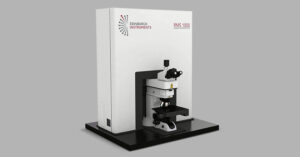
RMS1000

Multimodal Confocal Microscope

VIEW

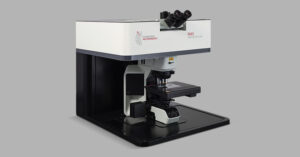
RM5

Raman Microscope

VIEW

Contact our expert team today to find out more about how our products can improve your research

Contact Us
PrevPrevious
Previous Radioluminescence for Quality Control of Perovskites 

RESOURCES

Tags:
  • Technical Notes
  • RM5
  • RMS1000
  • Raman
Related Posts:

RMS1000 Raman Microscope

View more »

RM5 Raman Microscope

View more »
Technical Note
Download PDF
Featured Product:

RMS1000 Raman Microscope

View more »
Suggested Reading:

Discrimination of Cooking Oils Using Raman Spectroscopy

View more »
Share:

Keep up to date with the latest from Edinburgh Instruments

Join our mailing list and keep up with our latest videos, app notes and more!

LOCATION:
  • Edinburgh Instruments Ltd.
    2 Bain Square, Kirkton Campus, Livingston, EH54 7DQ.
  • sales@edinst.com
  • +44 1506 425 300
ABOUT:
  • About Edinburgh Instruments
  • Techniques
  • Applications
  • Knowledgebase
  • About Edinburgh Instruments
  • Techniques
  • Applications
  • Knowledgebase
PRODUCTS:
  • Fluorescence Spectrometers
  • Raman Microscopes
  • UV-Vis Spectrophotometers
  • Transient Absorption
  • FTIR Spectrometers
  • Lasers and LEDs
  • Customisation Options
  • Software
  • Upgrades
  • All Products
  • Fluorescence Spectrometers
  • Raman Microscopes
  • UV-Vis Spectrophotometers
  • Transient Absorption
  • FTIR Spectrometers
  • Lasers and LEDs
  • Customisation Options
  • Software
  • Upgrades
  • All Products
LEGALS:
  • News
  • Events
  • Blog
  • Careers
  • Distribution & Agents
  • Contact Us
  • Terms and Conditions
  • Privacy Policy
  • News
  • Events
  • Blog
  • Careers
  • Distribution & Agents
  • Contact Us
  • Terms and Conditions
  • Privacy Policy
SOCIALS:
Youtube Linkedin X-twitter Facebook
©2024 Edinburgh Instruments. Registered in England and Wales No: 962331. VAT No: GB 271 7379 37
Manage Consent
To provide the best experiences, we use technologies like cookies to store and/or access device information. Consenting to these technologies will allow us to process data such as browsing behaviour or unique IDs on this site. Not consenting or withdrawing consent, may adversely affect certain features and functions.
Functional Always active
The technical storage or access is strictly necessary for the legitimate purpose of enabling the use of a specific service explicitly requested by the subscriber or user, or for the sole purpose of carrying out the transmission of a communication over an electronic communications network.
Preferences
The technical storage or access is necessary for the legitimate purpose of storing preferences that are not requested by the subscriber or user.
Statistics
The technical storage or access that is used exclusively for statistical purposes. The technical storage or access that is used exclusively for anonymous statistical purposes. Without a subpoena, voluntary compliance on the part of your Internet Service Provider, or additional records from a third party, information stored or retrieved for this purpose alone cannot usually be used to identify you.
Marketing
The technical storage or access is required to create user profiles to send advertising, or to track the user on a website or across several websites for similar marketing purposes.
  • Manage options
  • Manage services
  • Manage {vendor_count} vendors
  • Read more about these purposes
View preferences
  • {title}
  • {title}
  • {title}