Developing better battery design requires more than measuring electrochemical performance. Researchers also need to understand why materials behave as they do, from structural transformations in electrodes to changes in electrolytes and interfaces.
In this Edinburgh Instruments webinar, Dr Iona Hill explores how operando Raman microscopy combines spectroscopy with electrochemistry to reveal these processes in real time, with case studies covering electrocatalysts, electrode degradation and low-temperature battery electrolytes.
Raman microscopy is particularly versatile for electrochemical research because it can analyse materials including metal oxides, carbon, aqueous and organic electrolytes, and gels. This makes it possible to investigate different parts of a battery, from new phases and degradation products in electrodes to solvation, interfacial behaviour and ion transport.
When Raman microscopy is coupled with an electrochemical cell and potentiostat, spectra can be collected while an electrical potential is applied. Researchers can therefore correlate the vibrational response of a material with its electrochemical behaviour, providing time- and spatially resolved insight into transformations taking place during operation.
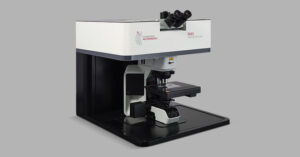
The first case study demonstrates operando Raman analysis of a water-splitting electrocatalyst. An Edinburgh Instruments RMS1000 Multimodal Confocal Microscope coupled to a custom three-electrode electrochemical cell was used to investigate nickel-iron phosphide and compare its behaviour with nickel-iron layered double hydroxide.
The electrochemical data showed superior hydrogen evolution performance for the phosphide catalyst, while oxygen evolution performance was similar for both materials. Operando Raman measurements helped explain this behaviour by revealing changes in the phosphide catalyst at higher potentials, providing evidence of instability under oxygen evolution conditions.
Raman imaging can also reveal where degradation occurs across an electrode. In the second case study, an Edinburgh Instruments RM5 Raman Microscope was used to compare pristine and cycled titanium dioxide/reduced graphene oxide electrodes from a photo-rechargeable battery.
After cycling, Raman mapping revealed a pronounced loss of the rutile titanium dioxide signal while anatase and reduced graphene oxide remained dominant. Crucially, rutile remained detectable in regions that had not contacted the electrolyte, linking its degradation directly to electrochemical cycling.
Raman spectroscopy also detected localised hexafluorophosphate salt deposits after cycling, demonstrating how Raman imaging can investigate degradation pathways involving both the electrode and electrolyte.
The final study shifts attention from the electrode to the electrolyte, investigating a flexible zinc-air battery designed for low-temperature operation. Researchers incorporated lithium chloride into a cellulose nanofibre-based hydrogel electrolyte to inhibit ice formation, a process that can reduce battery efficiency at sub-zero temperatures.
Raman spectroscopy revealed changes in the hydrogel structure as lithium chloride concentration increased. Analysis of water vibrational modes showed that lithium chloride weakened the ability of water to form ice crystals, providing molecular-level insight into how the modified electrolyte supports low-temperature operation.
Watch the full webinar to see Dr Iona Hill demonstrate how operando Raman spectroscopy and Raman imaging can provide deeper insight into electrochemical processes, help diagnose degradation pathways, and support the development of next-generation batteries and energy materials.