Skip to content
  • News
  • Events
  • eBooks
  • Blog
  • Careers
  • Contact
  • News
  • Events
  • eBooks
  • Blog
  • Careers
  • Contact
KNOWLEDGEBASE
  • About Us
  • Products

    Fluorescence Spectrometers:

    • FLS1000 Photoluminescence Spectrometer
    • FS5 Spectrofluorometer
    • LifeSpec II Lifetime Spectrometer
    • Mini-tau Lifetime Spectrometer

    Raman Microscopes:

    • RM5 Raman Microscope
    • RMS1000 Multimodal Confocal Microscope

    Transient Absorption:

    • LP980 Transient Absorption Spectrometer

    FTIR Spectrometers:

    • IR5 FTIR Spectrometer

    Lasers and LEDs:

    • Pulsed Lasers
    • Gas Lasers

    Options:

    • Upgrades
    • Customisation
    View All Products
  • Techniques
  • Applications
KNOWLEDGEBASE
  • About Edinburgh Instruments
  • Products
  • Techniques
  • Applications Old
  • Knowledgebase
  • eBooks
  • News
  • Events
  • Blog
  • Careers
  • Contact Us

RESOURCES

Accelerating Battery Design with Operando Raman Microscopy

  • October 24, 2025

KEY POINTS

  • Operando Raman microscopy enables researchers to monitor chemical and structural changes in electrochemical systems as they happen.
  • Raman spectroscopy can investigate electrodes, electrolytes and ion transport, helping researchers understand battery design, degradation, and performance.
  • Combining Raman microscopy with electrochemistry provides mechanistic insight that can guide the development of more durable and efficient energy-storage materials.

Developing better battery design requires more than measuring electrochemical performance. Researchers also need to understand why materials behave as they do, from structural transformations in electrodes to changes in electrolytes and interfaces.

In this Edinburgh Instruments webinar, Dr Iona Hill explores how operando Raman microscopy combines spectroscopy with electrochemistry to reveal these processes in real time, with case studies covering electrocatalysts, electrode degradation and low-temperature battery electrolytes.


Why Use Raman Spectroscopy for Battery Research?

Raman microscopy is particularly versatile for electrochemical research because it can analyse materials including metal oxides, carbon, aqueous and organic electrolytes, and gels. This makes it possible to investigate different parts of a battery, from new phases and degradation products in electrodes to solvation, interfacial behaviour and ion transport.

When Raman microscopy is coupled with an electrochemical cell and potentiostat, spectra can be collected while an electrical potential is applied. Researchers can therefore correlate the vibrational response of a material with its electrochemical behaviour, providing time- and spatially resolved insight into transformations taking place during operation.


Tracking Electrochemical Reactions in Real Time

The first case study demonstrates operando Raman analysis of a water-splitting electrocatalyst. An Edinburgh Instruments RMS1000 Multimodal Confocal Microscope coupled to a custom three-electrode electrochemical cell was used to investigate nickel-iron phosphide and compare its behaviour with nickel-iron layered double hydroxide.

The electrochemical data showed superior hydrogen evolution performance for the phosphide catalyst, while oxygen evolution performance was similar for both materials. Operando Raman measurements helped explain this behaviour by revealing changes in the phosphide catalyst at higher potentials, providing evidence of instability under oxygen evolution conditions.


Visualising Electrode Degradation

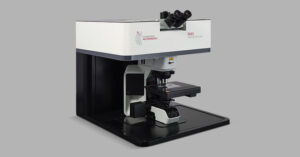
Raman imaging can also reveal where degradation occurs across an electrode. In the second case study, an Edinburgh Instruments RM5 Raman Microscope was used to compare pristine and cycled titanium dioxide/reduced graphene oxide electrodes from a photo-rechargeable battery.

After cycling, Raman mapping revealed a pronounced loss of the rutile titanium dioxide signal while anatase and reduced graphene oxide remained dominant. Crucially, rutile remained detectable in regions that had not contacted the electrolyte, linking its degradation directly to electrochemical cycling.

Raman spectroscopy also detected localised hexafluorophosphate salt deposits after cycling, demonstrating how Raman imaging can investigate degradation pathways involving both the electrode and electrolyte.


Designing Batteries for Low Temperatures

The final study shifts attention from the electrode to the electrolyte, investigating a flexible zinc-air battery designed for low-temperature operation. Researchers incorporated lithium chloride into a cellulose nanofibre-based hydrogel electrolyte to inhibit ice formation, a process that can reduce battery efficiency at sub-zero temperatures.

Raman spectroscopy revealed changes in the hydrogel structure as lithium chloride concentration increased. Analysis of water vibrational modes showed that lithium chloride weakened the ability of water to form ice crystals, providing molecular-level insight into how the modified electrolyte supports low-temperature operation.


Watch the Operando Raman Microscopy Webinar

Watch the full webinar to see Dr Iona Hill demonstrate how operando Raman spectroscopy and Raman imaging can provide deeper insight into electrochemical processes, help diagnose degradation pathways, and support the development of next-generation batteries and energy materials.


Read More Read Less

RELATED PRODUCTS

RMS1000

Multimodal Confocal Microscope

VIEW

RM5

Raman Microscope

VIEW

Contact our expert team today to find out more about how our products can improve your research

Contact Us
PrevPrevious
NextNext
Previous Terahertz Polarimetry with a Monolithic Metasurface Next FLIM Analysis of Light Emitting Diodes (LEDs): Mapping Defect-Induced Lifetime Variation in III/V Semiconductors

RESOURCES

Battery Design Webinar Featured Image
Tags:
  • Webinars
  • Batteries and Fuel Cells
  • RM5
  • RMS1000
  • Raman
Featured Product:

RMS1000 Raman Microscope

View more »

RM5 Raman Microscope

View more »
Suggested Reading:

Confocal Raman Imaging and Chemometric Analysis of Battery Electrode Degradation

View more »

Raman Microscopy for Flexible Zinc-Air Battery Design

View more »
Share:

Keep up to date with the latest from Edinburgh Instruments

Join our mailing list and keep up with our latest videos, app notes and more!

LOCATION:
  • Edinburgh Instruments Ltd.
    2 Bain Square, Kirkton Campus, Livingston, EH54 7DQ
  • sales@edinst.com
  • +44 1506 425 300
ABOUT:
  • About Edinburgh Instruments
  • Techniques
  • Applications
  • Knowledgebase
  • About Edinburgh Instruments
  • Techniques
  • Applications
  • Knowledgebase
PRODUCTS:
  • Fluorescence Spectrometers
  • Raman Microscopes
  • UV-Vis Spectrophotometers
  • Transient Absorption
  • FTIR Spectrometers
  • Lasers and LEDs
  • Customisation Options
  • Software
  • Upgrades
  • All Products
  • Fluorescence Spectrometers
  • Raman Microscopes
  • UV-Vis Spectrophotometers
  • Transient Absorption
  • FTIR Spectrometers
  • Lasers and LEDs
  • Customisation Options
  • Software
  • Upgrades
  • All Products
LEGALS:
  • News
  • Events
  • Blog
  • Careers
  • Distribution & Agents
  • Contact Us
  • Terms and Conditions
  • Privacy Policy
  • Coordinated Vulnerability Disclosure Policy
  • News
  • Events
  • Blog
  • Careers
  • Distribution & Agents
  • Contact Us
  • Terms and Conditions
  • Privacy Policy
  • Coordinated Vulnerability Disclosure Policy
SOCIALS:
Youtube Linkedin X-twitter Facebook
©2026 Edinburgh Instruments. Registered in England and Wales No: 962331. VAT No: GB 271 7379 37
Manage Consent
To provide the best experiences, we use technologies like cookies to store and/or access device information. Consenting to these technologies will allow us to process data such as browsing behaviour or unique IDs on this site. Not consenting or withdrawing consent, may adversely affect certain features and functions.
Functional Always active
The technical storage or access is strictly necessary for the legitimate purpose of enabling the use of a specific service explicitly requested by the subscriber or user, or for the sole purpose of carrying out the transmission of a communication over an electronic communications network.
Preferences
The technical storage or access is necessary for the legitimate purpose of storing preferences that are not requested by the subscriber or user.
Statistics
The technical storage or access that is used exclusively for statistical purposes. The technical storage or access that is used exclusively for anonymous statistical purposes. Without a subpoena, voluntary compliance on the part of your Internet Service Provider, or additional records from a third party, information stored or retrieved for this purpose alone cannot usually be used to identify you.
Marketing
The technical storage or access is required to create user profiles to send advertising, or to track the user on a website or across several websites for similar marketing purposes.
  • Manage options
  • Manage services
  • Manage {vendor_count} vendors
  • Read more about these purposes
View preferences
  • {title}
  • {title}
  • {title}