Skip to content
  • News
  • Events
  • eBooks
  • Blog
  • Careers
  • Contact
  • News
  • Events
  • eBooks
  • Blog
  • Careers
  • Contact
KNOWLEDGEBASE
  • About Us
  • Products

    Fluorescence Spectrometers:

    • FLS1000 Photoluminescence Spectrometer
    • FS5 Spectrofluorometer
    • LifeSpec II Lifetime Spectrometer
    • Mini-tau Lifetime Spectrometer

    Raman Microscopes:

    • RM5 Raman Microscope
    • RMS1000 Multimodal Confocal Microscope

    Transient Absorption:

    • LP980 Transient Absorption Spectrometer

    FTIR Spectrometers:

    • IR5 FTIR Spectrometer

    Lasers and LEDs:

    • Pulsed Lasers
    • Gas Lasers

    Options:

    • Upgrades
    • Customisation
    View All Products
  • Techniques
  • Applications
KNOWLEDGEBASE
  • About Edinburgh Instruments
  • Products
  • Techniques
  • Applications
  • Knowledgebase
  • eBooks
  • News
  • Events
  • Blog
  • Careers
  • Contact Us

RESOURCES

Selecting the Best Cuvette for UV-Vis and Fluorescence Spectroscopy

  • May 29, 2026

KEY POINTS

  • Cuvettes are laboratory vessels that allow for precise and reproducible spectral measurements of liquid samples.
  • Measurement type, material, path length, volume, and Z-dimension are all factors to be considered when choosing a cuvette.
  • By understanding the properties of cuvettes, the optimal choice can be made for the best spectral output.

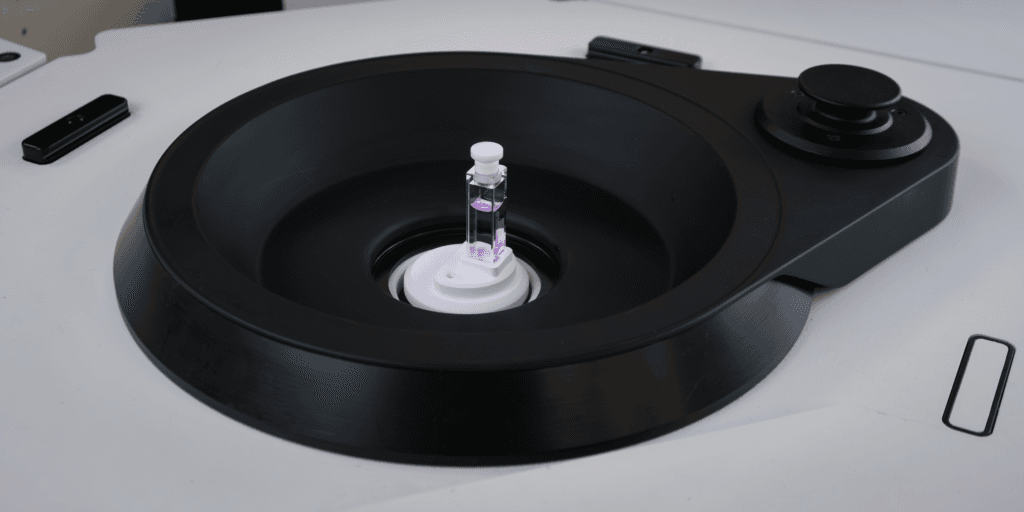
Cuvettes are small laboratory vessels used to hold samples (typically liquid) for spectroscopic measurements, such as UV Vis spectrophotometry and fluorescence spectroscopy (Figure 1). They allow for precise and reproducible spectroscopic measurements by providing a consistent optical path. Different varieties of cuvettes are available, some of which can be optimal depending on the methodology and requirements of the application. This Spectral School will discuss the factors to consider when selecting the most suitable cuvette for spectroscopic measurements. 
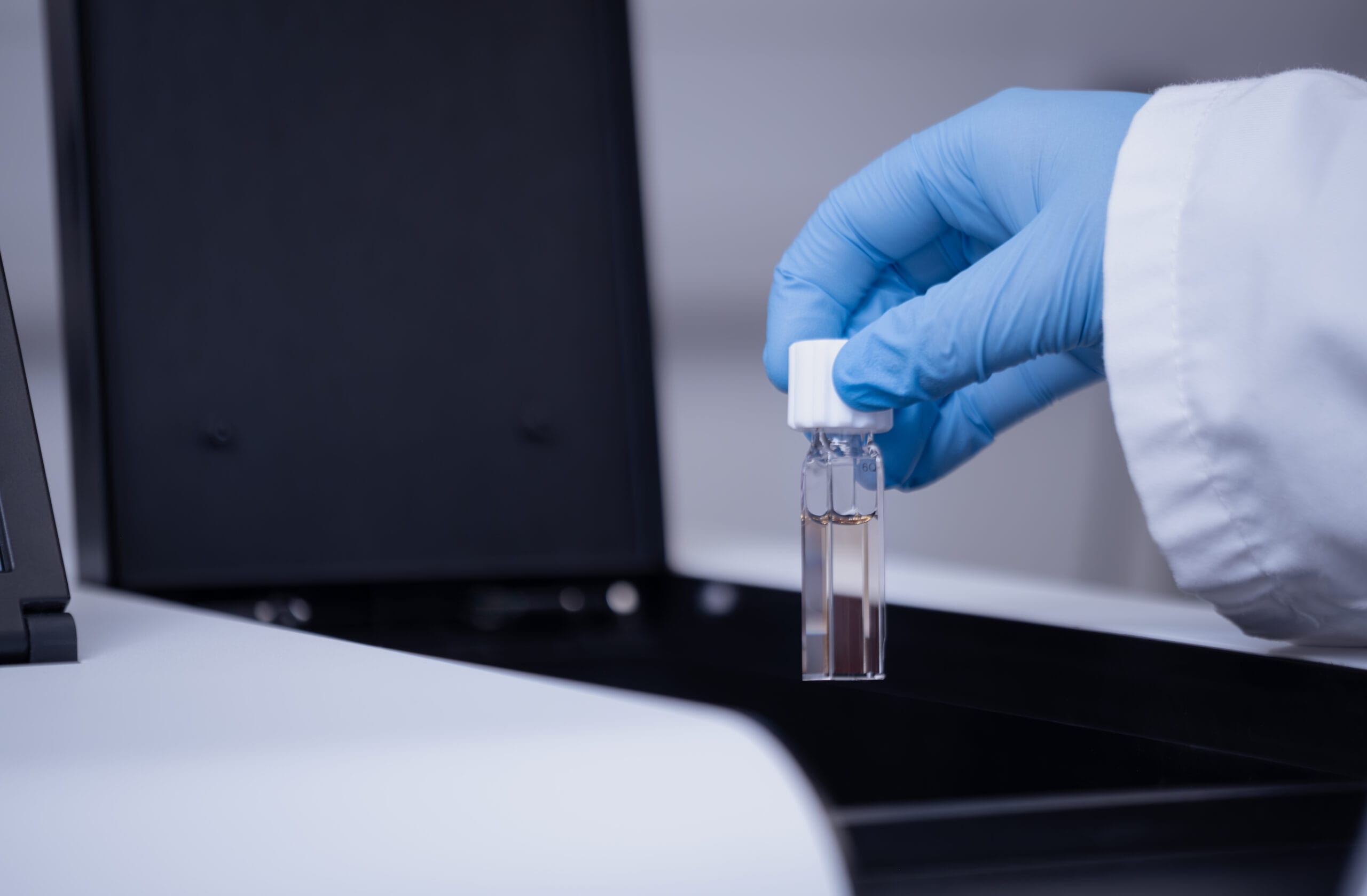
Image of a standard 10 mm cuvette used for spectral measurements.

Figure 1. A cuvette used for spectral measurements. 


UV-Vis vs. Fluorescence Cuvettes

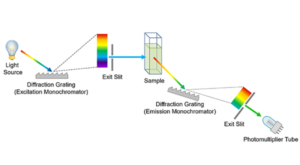
UV-Vis and fluorescence spectroscopy differ in how light is measured. In UV-Vis spectrophotometry, the light passes through the sample in a straight line (180°) and the fraction of light transmitted through the solution detected (Figure 2a). In contrast, fluorescence spectrometers typically use a 90° measurement geometry, in which the emitted fluorescence is collected perpendicular to the excitation light (Figure 2b). This setup avoids interference from the transmitted excitation light, reducing the background signal and improving sensitivity. 
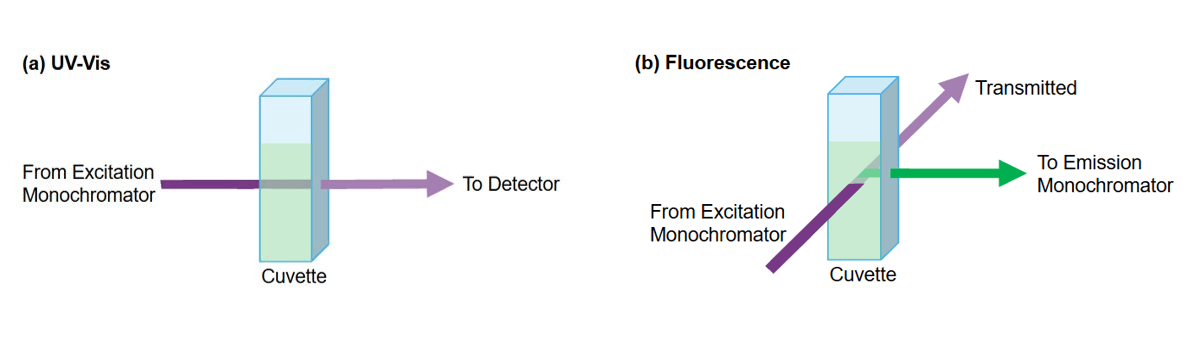
Diagram comparing the light path in UV-Vis and fluorescence spectroscopy.

Figure 2. Light path in (a) UV-Vis spectroscopy, where light travels through the sample at 180°, and (b) fluorescence spectroscopy, where light is collected at a 90° angle.

Due to the difference in measurement geometry, different cuvettes are used for each technique.  UV-Vis cuvettes have two clear optical windows that allow light to pass through the sample and two frosted sides for ease of handling. Fluorescence cuvettes have four clear optical windows due to the 90° angle light collection. Two–sided UV-Vis cuvettes cannot be used for fluorescence measurements as they scatter the excitation light and reduce sensitivity. 


Material

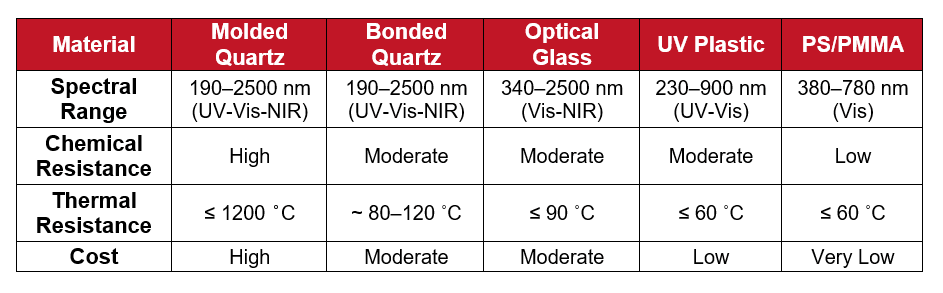
Cuvettes are made from a variety of materials, with the most common being quartz (molded or bonded type), optical glass, and plastic (PS, PMMA or UV-grade). Specialised materials such as sapphire can also be used, however they are beyond the scope of this note. The choice of material depends on the instrumental and experimental requirements, including factors such as spectral range, durability, and budget. A brief overview can be found below (Table 1), followed by more detailed descriptions of each factor.

Table 1. Summary of cuvette material comparison.  
A table comparing cuvette materials according to different factors (spectral range, chemical and thermal resistance, and cost).


Spectral Range 

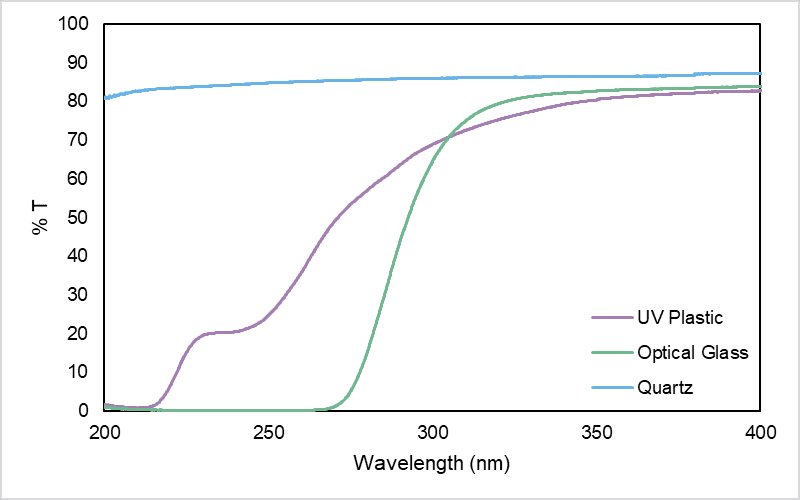
The material of a cuvette determines its transparency at different wavelengths – it is important that the cuvette transmits light at the wavelength(s) used in the experiment, particularly for measurements in the UV region (Figure 3).

  • Quartz cuvettes have a wide spectral range from ~190–2500 nm, covering the UV, visible, and near-infrared (NIR) regions.
  • Optical glass is transparent in the range ~340–2500 nm, so cuvettes made from this material can be used for visible and NIR measurements. 
  • UV plastic materials are transparent from ~230–900 nm, allowing for measurements in the UV and visible regions. 
  • PS/PMMA cuvettes transmit light in the range of ~380–780 nm, making them suitable for measurements in the visible region

Since neither optical glass nor PS/PMMA cuvettes are transparent in the UV region, they are not suitable for UV measurements, e.g. DNA quantitation at 260 nm (A260). Quartz is the gold standard for UV applications, with a high transmission rate of >80% from the UV to the NIR. UV plastic provides a more convenient and cost-effective alternative to quartz, which is well suited for routine analyses, however it is a less transmissive and robust material.1 
Overlaid transmission spectra of a UV plastic cuvette, optical glass cuvette, and a quartz cuvette in the UV region.

Figure 3. Transmission spectra of different cuvette materials in the UV region. Acquired on an Edinburgh Analytical DB30 UV-Vis Spectrophotometer. 


Chemical Resistance

Another important consideration for cuvette selection is the chemical resistance of the material, i.e. how resistant the cuvette is to aggressive solvents.  

  • Molded quartz cuvettes are formed from monolithic fused quartz. This makes them highly chemically inert and resistant to most organic solvents, acids and bases, and aqua regia. Quartz cuvettes are suitable for handling a majority strong acids (e.g. HCl, H2SO4) at different temperatures.Exceptions include hot concentrated phosphoric acid (H3PO4) which can damage the quartz at temperatures above 150 °C; and hydrofluoric acid (HF), which can dissolve the material even at low temperatures and concentrations.2 Quartz cuvettes also have a high alkali resistance and can handle strong bases (e.g. NaOH, KOH); however, prolonged exposure and heating can reduce the cuvette’s transparency and precision.
  • Bonded quartz has less chemical resistance than molded quartz. The glue used to bond the faces of the cuvette together can be compromised by certain solvents. So, while the quartz itself may be inert to these solvents, the glue may degrade or dissolve, causing cuvette failure. These cuvettes are compatible with common acids and strong alkalis, though this is usually limited to short-term use or exposure as the adhesive will degrade over time. They are not compatible with organic solvents such as toluene or chloroform, nor with aqua regia.2
  • Optical glass cuvettes have a moderate chemical resistance – they are suitable for short-term storage of strong acids and bases. Similar to quartz, optical glass gets corroded by HF. Long-term exposure to strong bases also causes damage, especially at high temperatures.
  • UV plastic offers a similar level of chemical compatibility to glass. It can be used with most polar organic solvents, and most acids and bases. However, the material is not resistant to chloroform or hexane.
  • PS/PMMA cuvettes are the least resistant out of these materials. They are compatible with aqueous solutions, but they can be damaged and/or dissolved by organic solvents such as acetone, chloroform, and toluene


Thermal Resistance 

Reaction temperature can also affect the choice of cuvette material. It is important to consider for applications involving high temperatures or risk of thermal shock. 

  • Molded quartz cuvettes are the most thermally resistant, remaining stable up to 1200 °C.2 These cuvettes are well suited for high–temperature applications, i.e. catalytic research or metal oxide studies. However, it is recommended to keep the temperature under 800 °C to maintain the longevity of the cuvette.3 
  • Bonded quartz has a much lower tolerance for high temperatures compared to molded quartz. While the actual quartz material is still stable up to 1200 °C, the adhesive holding the cuvette together fails at much lower temperatures. This results in bonded quartz cuvettes only being able to handle temperatures of up to ~80–120 °C.2 
  • Optical glass offers a moderate resistance to heat, up to approximately 90 °C when it begins to deform.2  
  • Plastic (UV-grade and PS/PMMA) is best suited for lower temperature use, as it begins to melt around 60 °C.2 


Cost 

Another factor to consider is the cost of each cuvette material. Depending on the intended applications and methods,

  • Quartz offers a broad spectral range and high durability, making it a lot more expensive compared to glass and plastic. Bonded quartz cuvettes are less expensive than molded ones, though they have disadvantages in terms of chemical and thermal resistance, so it is important to consider the intended applications and reaction conditions. Regardless of the price, investing in quartz cuvettes is typically recommended for high-precision analysis and research applications.  
  • Optical glass is more affordable than quartz and is also suitable for long-term use. However, it is not an appropriate material for UV measurements, or experiments requiring extreme thermal conditions and long-term exposure to harsh solvents.
  • Plastic cuvettes come at a low cost, and they are disposable and shatterproof, though they have much more limited transparency and durability. UV plastic is more expensive than PS/PMMA, though it has the added advantage of UV transparency and improved solvent compatibility. This makes UV plastic cuvettes a very cost-effective alternative to quartz, if used for routine analysis under appropriate reaction conditions.


Path length 

The path length of a cuvette is the distance that the incident light travels through the sample, and is equivalent to the distance between the interior walls of the cuvette. The path length (l) has a direct, linear relationship with the absorbance (A) of the sample solution in accordance with the Beer-Lambert Law (A = εlc). 

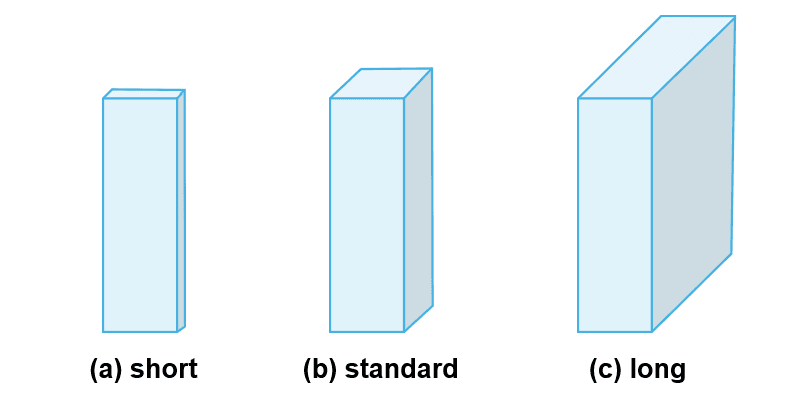
Path lengths typically range between 1 mm and 100 mm. Most commonly, cuvettes are designed with a standard path length of 10 mm, which is compatible with most spectrometers; however, short and long path lengths are also available (Figure 4a–c).
A diagram showing the different appearances of cuvettes with short, standard, and long pathlengths.

Figure 4. Cuvettes with (a) short, (b) standard, and (c) long pathlengths. 

  • Short path length cuvettes (Figure 4a) are most suitable for applications involving high-concentration samples, e.g. dense bacterial cultures. Using a shorter path length allows transmission through high absorbance solutions in UV-Vis measurements, and helps reduce the Inner Filter Effect during fluorescence applications. This approach also allows for easier and more accurate measurements by avoiding additional serial dilutions. 
  • Long path length cuvettes (Figure 4c) are typically used for very dilute and low-concentration samples. The longer path length allows light to pass through more of the sample, which increases the absorbance and improves sensitivity. These cuvettes are particularly useful for trace analysis and environmental testing, e.g. impurities and pollutants in water. 


Volume 

Cuvette volume is the maximum amount of liquid sample that a cuvette can safely hold. Different cuvette volumes may be more appropriate for certain applications depending on sample availability and concentration. It is important to note that cuvettes can still have the standard exterior dimensions (12.5 × 12.5 × 45 mm) while having a different internal capacity (e.g. a narrower inner width or a shorter inner height). This allows the cuvette to hold a smaller volume of sample and still fit into the standard cell holder of most UV-Vis and fluorescence spectrometers. 

Maximum cuvette volume can be determined using Equation 1. The volume is calculated at 80% capacity: it is not recommended to fill a cuvette any further, to prevent overflow and unwanted spillages. 

Inner Length x Inner Width x Inner Height x 80% = Cuvette Volume

Different categories of cuvettes are available depending on the desired volume (Table 2).3 

  • Standard 10 mm path length cuvettes hold a volume of 3.5 mL and are suitable for most analytical applications. Typically, UV-Vis and fluorescence spectrometers will come with a standard sample chamber which can readily accommodate a 10 mm cuvette.
  • Macro cuvettes are designed for volumes greater than 3.5 mL. They are useful for low-concentration samples (due to the longer path length) and temperature-sensitive applications, as they provide better surface contact with temperature-controlled holders.4
  • Semi-micro and sub-micro cuvettes are used when a sample volume smaller than 3.5 mL is required or available – they are ideal for applications involving biochemical assays, DNA and protein analysis, or clinical samples.

It is important to note that many small volume cuvettes have a shorter inner height, or a restricted sample window: therefore, they have a specific Z-dimension which must match that of the spectrometer. More details on Z-dimensions can be found in the next section. 

Table 2. Categories of cuvette sizes and the volumes they can hold. 

A table summarising categories of cuvette sizes and what volumes they can hold.


Z-Dimension 

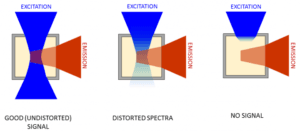
The Z-dimension (ZD) of a cuvette is the vertical distance between the bottom of the cuvette to the centre of the sample window/aperture, through which the incident light passes. The ZD is an important factor, particularly for small volume and short height cuvettes, as it must be matched to the light beam path of the spectrometer. The most common ZD are 8.5 mm, 15 mm, or 20 mm (Figure 5a-c).1 
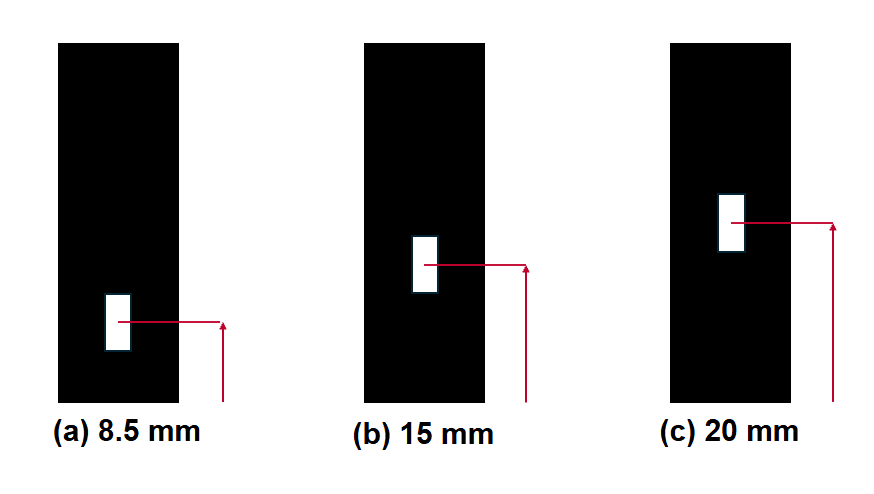
Sub-micro cuvettes in common Z-dimensionsFigure 5. Sub-micro cuvettes in common Z-dimensions: (a) 8.5 mm, (b) 15 mm, and (c) 20 mm. 

It is important to ensure the compatibility of the cuvette and spectrometer ZD, otherwise the light will not be able to pass through the sample. The UV-Vis and fluorescence spectrometry products offered by Edinburgh Instruments (FS5 Spectrofluorometer and FLS1000 Photoluminescence Spectrometer) and Edinburgh Analytical (DB30 UV-Vis Spectrophotometer and FE30 Fluorescence Spectrometer)  all have a ZD of 15 mm (Figure 4b)


Conclusion

This Spectral School has discussed the considerations when selecting a cuvette for UV-Vis spectrophotometry and fluorescence spectroscopy. Different factors – measurement geometry, material, path length, volume, and Z-dimension – are of significance depending on the experiment. The most commonly used cuvette has a standard 10 mm pathlength and a volume of 3.5 m. For material, molded quartz is the gold standard with the highest transparency, durability, chemical and thermal resistance. Glass and plastic are lower cost alternatives and are suitable for many applications.
 

References 

  1. AirekaCells, https://airekacells.com/cuvette-guide#cuvette-materials , (accessed March 2026). 
  2. Qvarz, https://qvarz.com/quartz-cuvette/, (accessed March 2026).  
  3. Alfa Quartz, https://www.quartzalfa.com/blog/what-is-the-maximum-temperature-a-quartz-cuvette-can-withstand-2075182.html, (accessed March 2026). 
  4. Spectrecology, https://spectrecology.com/blog/guide-to-cuvettes/, (accessed March 2026). 
  5. Eppendorf, https://www.eppendorf.com/gb-en/lab-academy/lab-solutions/other/which-cuvette-is-the-right-one-glass-vs-plastic-vis-vs-uv-micro-volume-vs-macro-volume/, (accessed March 2026). 

RELATED PRODUCTS

FLS1000

Photoluminescence Spectrometer

VIEW

FS5

Spectrofluorometer

VIEW

Contact our expert team today to find out more about how our products can improve your research

Contact Us
PrevPrevious
Previous Measuring Photon Antibunching Using g⁽²⁾ Correlation with the RMS1000

RESOURCES

Tags:
  • Spectral School
  • Photoluminescence
  • UV-Vis
Suggested Reading:

What is the Inner Filter Effect?

View more »

What is a Spectrometer?

View more »

The Beer-Lambert Law

View more »
Share:

Keep up to date with the latest from Edinburgh Instruments

Join our mailing list and keep up with our latest videos, app notes and more!

LOCATION:
  • Edinburgh Instruments Ltd.
    2 Bain Square, Kirkton Campus, Livingston, EH54 7DQ.
  • sales@edinst.com
  • +44 1506 425 300
ABOUT:
  • About Edinburgh Instruments
  • Techniques
  • Applications
  • Knowledgebase
  • About Edinburgh Instruments
  • Techniques
  • Applications
  • Knowledgebase
PRODUCTS:
  • Fluorescence Spectrometers
  • Raman Microscopes
  • UV-Vis Spectrophotometers
  • Transient Absorption
  • FTIR Spectrometers
  • Lasers and LEDs
  • Customisation Options
  • Software
  • Upgrades
  • All Products
  • Fluorescence Spectrometers
  • Raman Microscopes
  • UV-Vis Spectrophotometers
  • Transient Absorption
  • FTIR Spectrometers
  • Lasers and LEDs
  • Customisation Options
  • Software
  • Upgrades
  • All Products
LEGALS:
  • News
  • Events
  • Blog
  • Careers
  • Distribution & Agents
  • Contact Us
  • Terms and Conditions
  • Privacy Policy
  • News
  • Events
  • Blog
  • Careers
  • Distribution & Agents
  • Contact Us
  • Terms and Conditions
  • Privacy Policy
SOCIALS:
Youtube Linkedin X-twitter Facebook
©2024 Edinburgh Instruments. Registered in England and Wales No: 962331. VAT No: GB 271 7379 37
Manage Consent
To provide the best experiences, we use technologies like cookies to store and/or access device information. Consenting to these technologies will allow us to process data such as browsing behaviour or unique IDs on this site. Not consenting or withdrawing consent, may adversely affect certain features and functions.
Functional Always active
The technical storage or access is strictly necessary for the legitimate purpose of enabling the use of a specific service explicitly requested by the subscriber or user, or for the sole purpose of carrying out the transmission of a communication over an electronic communications network.
Preferences
The technical storage or access is necessary for the legitimate purpose of storing preferences that are not requested by the subscriber or user.
Statistics
The technical storage or access that is used exclusively for statistical purposes. The technical storage or access that is used exclusively for anonymous statistical purposes. Without a subpoena, voluntary compliance on the part of your Internet Service Provider, or additional records from a third party, information stored or retrieved for this purpose alone cannot usually be used to identify you.
Marketing
The technical storage or access is required to create user profiles to send advertising, or to track the user on a website or across several websites for similar marketing purposes.
  • Manage options
  • Manage services
  • Manage {vendor_count} vendors
  • Read more about these purposes
View preferences
  • {title}
  • {title}
  • {title}