
Skip to content
  • News
  • Events
  • eBooks
  • Blog
  • Careers
  • Contact
  • News
  • Events
  • eBooks
  • Blog
  • Careers
  • Contact
KNOWLEDGEBASE
  • About Us
  • Products

    Fluorescence Spectrometers:

    • FLS1000 Photoluminescence Spectrometer
    • FS5 Spectrofluorometer
    • LifeSpec II Lifetime Spectrometer
    • Mini-tau Lifetime Spectrometer

    Raman Microscopes:

    • RM5 Raman Microscope
    • RMS1000 Multimodal Confocal Microscope

    Transient Absorption:

    • LP980 Transient Absorption Spectrometer

    FTIR Spectrometers:

    • IR5 FTIR Spectrometer

    Lasers and LEDs:

    • Pulsed Lasers
    • Gas Lasers

    Options:

    • Upgrades
    • Customisation
    View All Products
  • Techniques
  • Applications
KNOWLEDGEBASE
  • About Edinburgh Instruments
  • Products
  • Techniques
  • Applications
  • Knowledgebase
  • eBooks
  • News
  • Events
  • Blog
  • Careers
  • Contact Us

RESOURCES

Advancing Phosphor Research with the FLS1000: Prof. Yuanbing Mao

  • June 5, 2026

KEY POINTS

  • Cutting‑edge research on phosphors and optical nanomaterials relies on advanced spectroscopic techniques such as persistent luminescence, thermoluminescence, and optically stimulated luminescence to understand emission behaviour of the materials.
  • The FLS1000 spectrometer at Illinois Institute of Technology enables Prof. Yuanbing Mao’s team to develop multifunctional metal oxides and their nanosized materials for optoelectronics, energy and data storage, and sensing.
  • The modular design, spectral and time-resolved acquisition, temperature control accessories, and high sensitivity of the FLS1000 make it an essential platform for Prof. Mao as well as for the wider field of optical materials research.

Taking optical materials into the 21st century

Professor Yuanbing Mao leads the Multifunctionalized Applications of Oxides (MAO) Research Group at the Illinois Institute of Technology (Figure 1). His group focuses on the design and development of advanced nanomaterials, particularly multifunctional metal oxides, with the aim of achieving novel properties for next-generation applications in optoelectronics, energy conversion/storage, and sustainability.

Prof. Mao’s research spans synthesis, structural control, and optical characterisation of nanomaterials and inorganic phosphors. These materials underpin light-based technologies including device screens, optical data storage, radiation detection, medical instruments, anticounterfeiting, and environmental sensing. The MAO team have recently developed ultraviolet persistent phosphors, broad-spectrum multimodal phosphors, and near–infrared emitters with outstanding thermal stability. Motivated by the shift from 20th-century electronics to photonics (what he calls the “century of the photon”), Prof. Mao designs materials to meet modern demands for efficient, tuneable, and persistent light emission. 
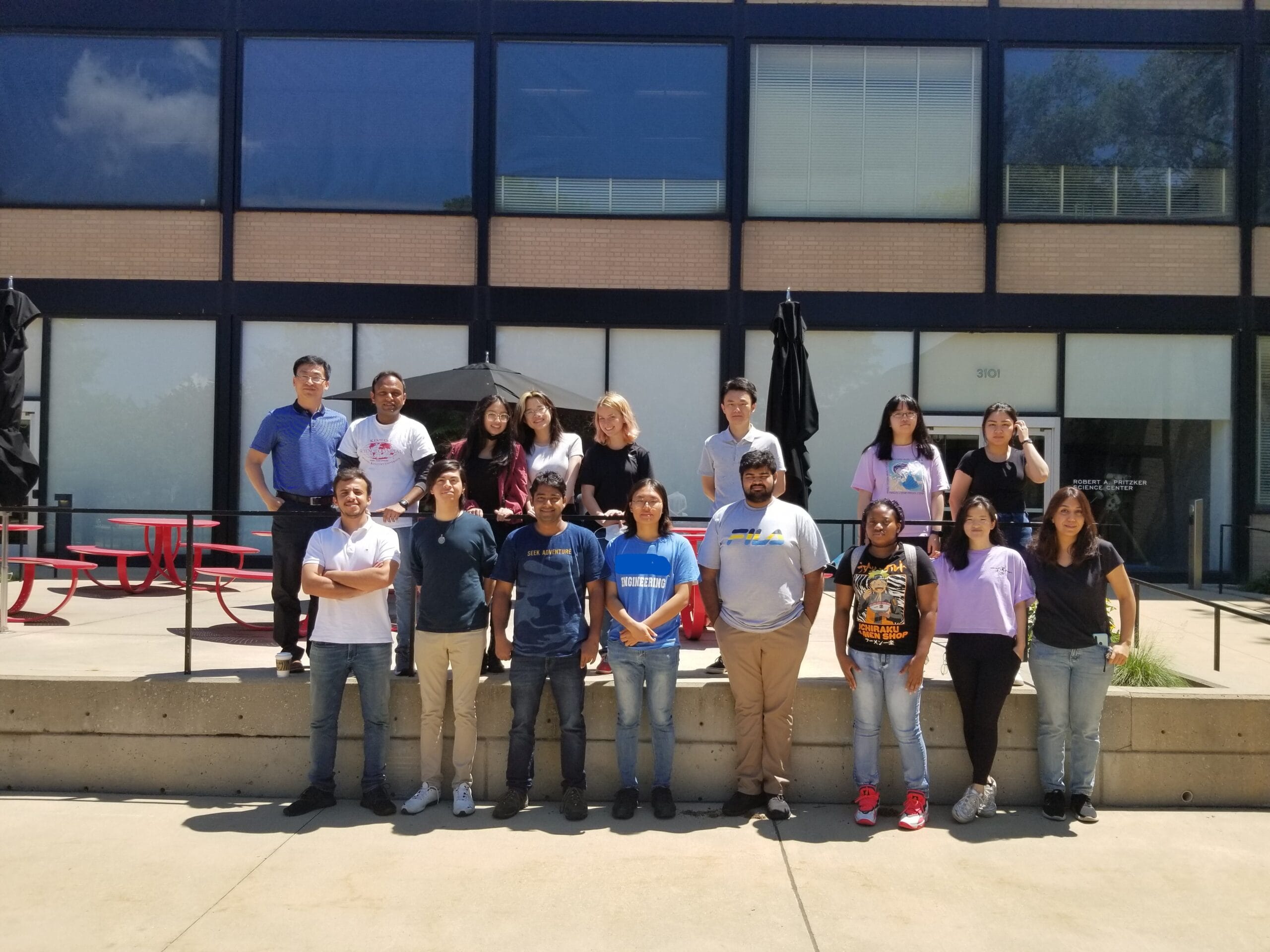
Professor Yuanbing Mao and the Multifunctionalized Applications of Oxides Research Group

Figure 1. MAO research group at Illinois Institute of Technology. 

Why the MAO group chose the Edinburgh Instruments FLS1000

The MAO group deploys an array of experimental techniques to drive their wide-ranging research, from synthesis to spectroscopic and microscopic characterisation. Photoluminescence (PL) spectroscopy is an integral part of their work including advanced techniques such as radioluminescence, upconversion, persistent luminescence, thermoluminescence, and optically stimulated luminescence. 

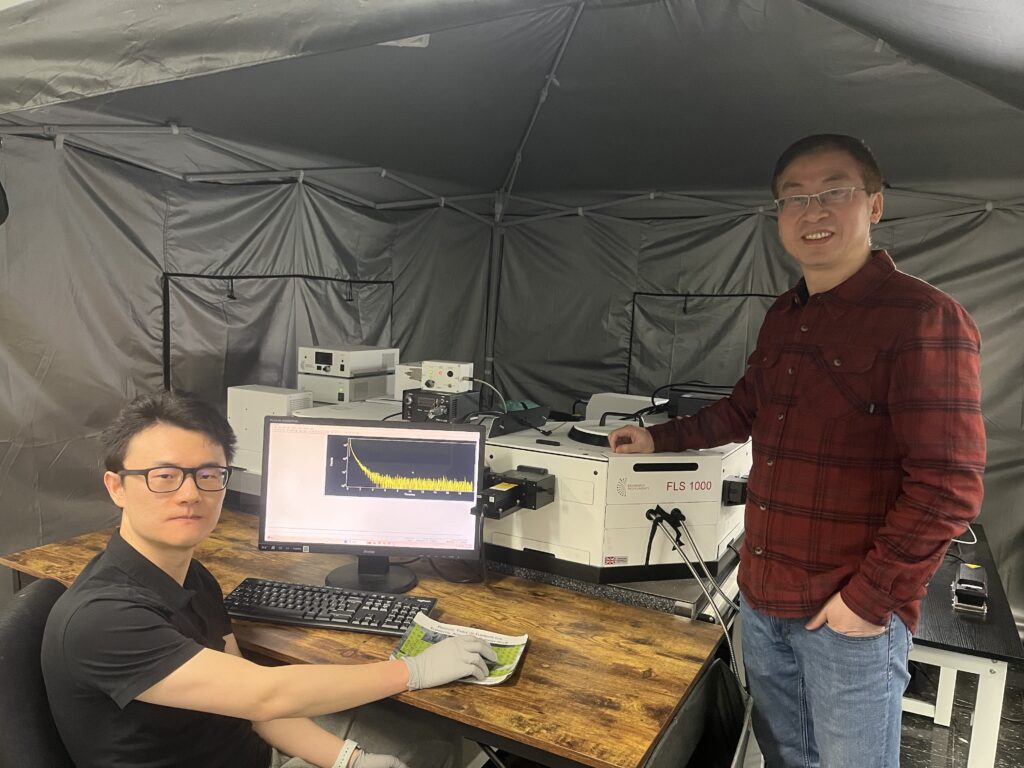
To meet these experimental demands, Prof. Mao relies on the Edinburgh Instruments FLS1000 Photoluminescence Spectrometer (Figure 2). He notes that its modular design, research-grade performance, and versatility make it a central analytical tool in his optical materials lab. 

“I chose Edinburgh Instruments mainly due to FLS1000 photoluminescence spectrometer’s high modularity, capability for powder samples, ultimate sensitivity and versatility in steady-state and time-resolved photoluminescence research.” 

FLS1000 from Edinburgh Instruments inside the Multifunctionalized Applications of Oxides (MAO) Research Group

Figure 2. FLS1000 spectrometer in the MAO lab.


Characterising anti‑thermal quenching with the FLS1000 

Thermal quenching, where emission efficiency drops with increasing temperature, is a major challenge for phosphors used in lighting, display, and sensing applications. The MAO group works to overcome this limitation by exploring materials with negative thermal expansion (NTE), referring to abnormal volume contraction along with increasing temperature, which exhibit unusual anti–thermal quenching behaviour. 

Using the FLS1000 coupled with a Linkam heating stage, the team conducted temperature dependent PL measurements of NTE-based phosphors up to 848 K (Figure 3)1. These experiments enabled them to monitor how temperature-dependent structural changes influence luminescence emission and to investigate the mechanism behind anti-thermal quenching.

These insights advance phosphor design for applications such as luminescent thermometry, high intensity lighting, lasing materials, automotive displays, and aerospace instrumentation. 
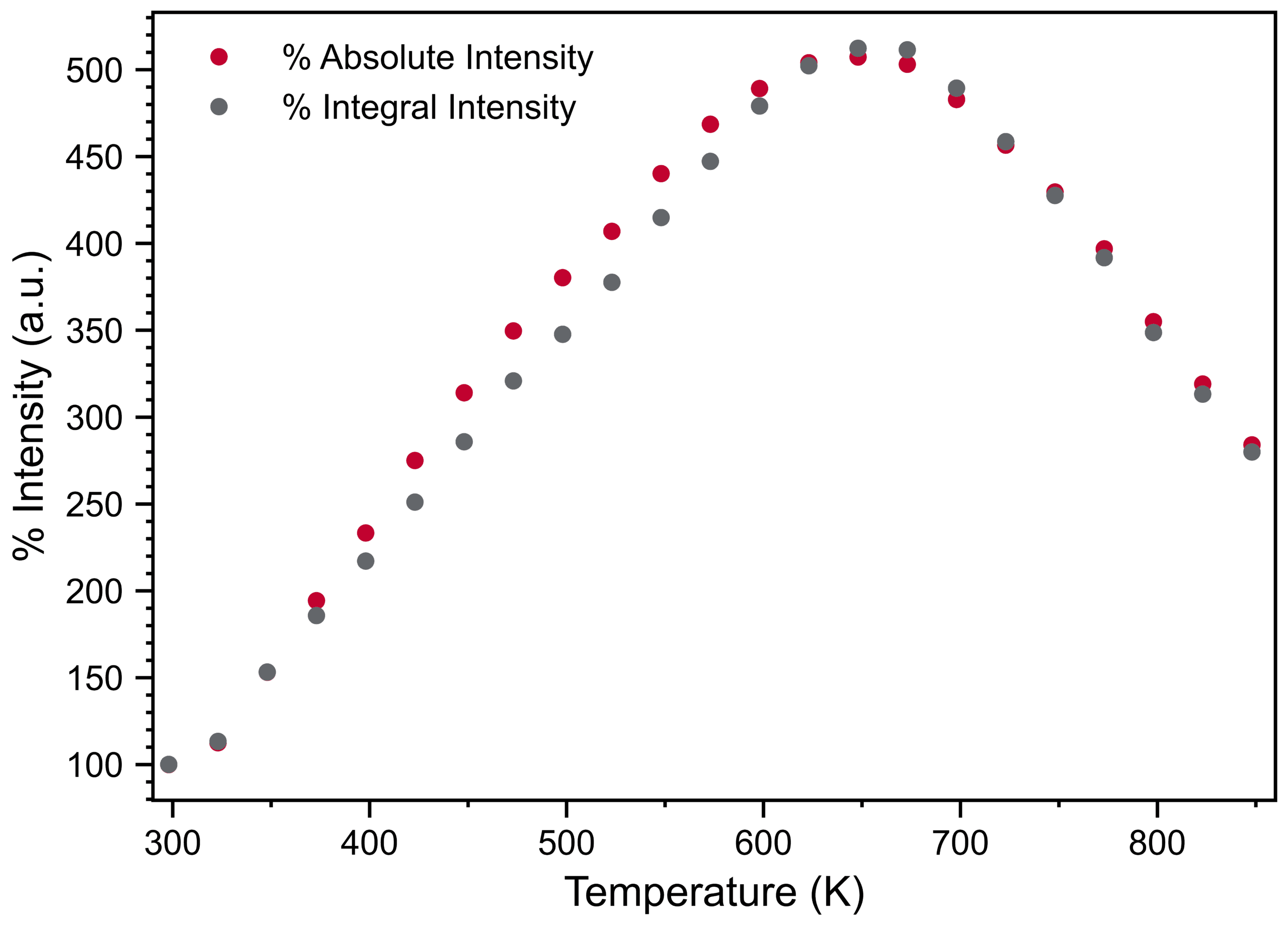
Using the FLS1000 coupled with a Linkam heating stage, the team conducted temperature dependent PL measurements of NTE-based phosphors up to 848 KFigure 3. Temperature-dependent absolute and integrated intensities of Eu3+ emission at 613 nm from Sc2MO3O12:Tb3+,Eu3+. Data provided by Prof. Yuanbing Mao. 


Advancing optical data storage with optically stimulated luminescence

Another focus of the MAO Group is optically stimulated luminescence (OSL), a process where preirradiated materials emit light when stimulated with lower energy photons. OSL materials are attractive for emerging optical data storage (ODS) technologies due to their operation at room temperature, ultrahigh storage capacity, long lifetimes, low power consumption, rewritability and erasability.

The FLS1000 plays a crucial role in enabling this research with measurements of OSL and thermally stimulated luminescence (TSL) decays. Using the FLS1000, Prof. Mao’s team demonstrated how tailored dopants in systems with Ca3Ga4O9–based host as one example significantly increase storage performance, offering a promising strategy for next generation optical memory devices (Figure 4)2

“The compact, user-friendly Edinburgh Instruments FLS1000 Photoluminescence Spectrometers designed with high-performance, research-grade flexibility, modular versatility, and full automation provides the perfect photoluminescence solution for our exploration of desirable optically stimulated luminescence materials.” 
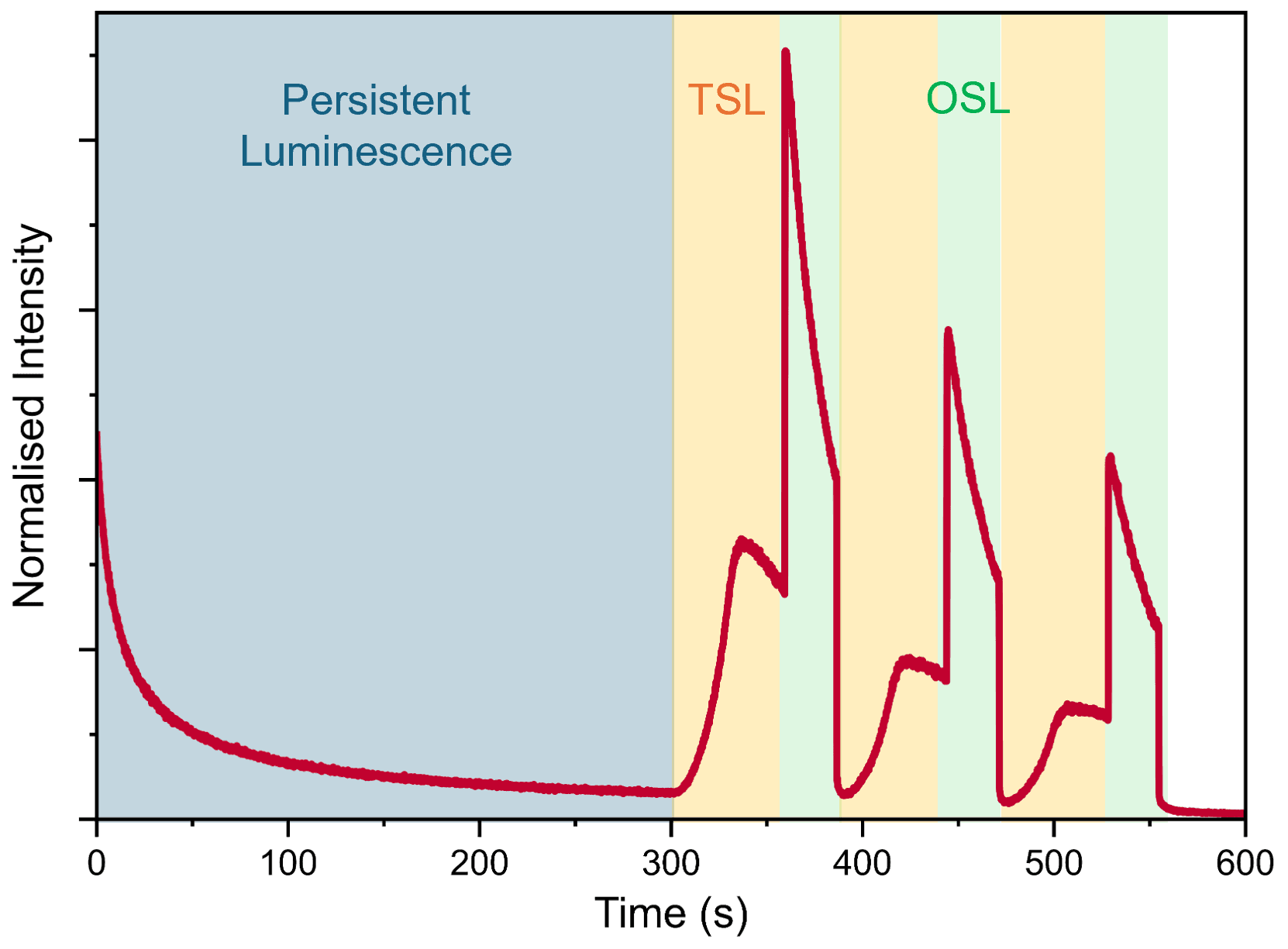
synergistic behaviour of thermally stimulated luminescence (TSL) and optically stimulated luminescence (OSL) of Al3+-substituted Ca2.985Ga4O9:0.5%Tb3+.

Figure 4. Synergistic behaviour of thermally stimulated luminescence (TSL) and optically stimulated luminescence (OSL) of Al3+-substituted Ca2.985Ga4O9:0.5%Tb3+. Persistent luminescence (PersL) was captured after initial excitation at 254 nm for 5 min. TSL by 323 K stimulation was recorded by heating the sample from room temperature to 323 K at 50 °C min−1 maintained for 30 s and cool to room temperature at the same rate. Synergistic OSL decays were acquired after turning on a 980 nm laser during the cooling period for 30 s. Data provided by Prof. Yuanbing Mao


Looking ahead: The future of optical nanomaterials and the role of Edinburgh Instruments

Prof. Mao sees the field accelerating rapidly as more researchers explore inorganic phosphors along with nanosized samples for lighting, displays, energy harvesting, temperature sensing, and photonic data technologies. Achieving better luminous efficacy, colour quality, and thermal stability will require continued innovation in both material design and optical characterisation capabilities. 

According to Prof. Mao, the future of modern phosphor research depends on user–friendly, reliable photoluminescence spectroscopy systems with both steady state and time resolved capabilities. The FLS1000 platform from Edinburgh Instruments will remain essential in helping the MAO group, and the broader field, push boundaries in photonic materials research. 
References 

  1. F.Jahanbazi, N.Dimakis, Y.Mao, Adv. Optical Mater. 2024, 12, 2301219. DOI: 10.1002/adom.202301219
  2. T. M.Abeywickrama, A.Guo, Y.Mao, Adv. Optical Mater. 2025, 13, 2402353. DOI: 10.1002/adom.202402353 

RELATED PRODUCTS

FLS1000

Photoluminescence Spectrometer

VIEW

FS5

Spectrofluorometer

VIEW

Contact our expert team today to find out more about how our products can improve your research

Contact Us
PrevPrevious
Previous Confocal Raman Imaging and Chemometric Analysis of Battery Electrode Degradation

RESOURCES

Tags:
  • Customer Application
  • Environment
  • LEDs and Lighting
  • Photophysics
  • FLS1000
  • Photoluminescence
Download PDF
Featured Product:

FLS1000 Photoluminescence Spectrometer

View more »
Suggested Reading:

Kinetics of Persistent Luminescence Phosphors

View more »
Share:

Keep up to date with the latest from Edinburgh Instruments

Join our mailing list and keep up with our latest videos, app notes and more!

LOCATION:
  • Edinburgh Instruments Ltd.
    2 Bain Square, Kirkton Campus, Livingston, EH54 7DQ.
  • sales@edinst.com
  • +44 1506 425 300
ABOUT:
  • About Edinburgh Instruments
  • Techniques
  • Applications
  • Knowledgebase
  • About Edinburgh Instruments
  • Techniques
  • Applications
  • Knowledgebase
PRODUCTS:
  • Fluorescence Spectrometers
  • Raman Microscopes
  • UV-Vis Spectrophotometers
  • Transient Absorption
  • FTIR Spectrometers
  • Lasers and LEDs
  • Customisation Options
  • Software
  • Upgrades
  • All Products
  • Fluorescence Spectrometers
  • Raman Microscopes
  • UV-Vis Spectrophotometers
  • Transient Absorption
  • FTIR Spectrometers
  • Lasers and LEDs
  • Customisation Options
  • Software
  • Upgrades
  • All Products
LEGALS:
  • News
  • Events
  • Blog
  • Careers
  • Distribution & Agents
  • Contact Us
  • Terms and Conditions
  • Privacy Policy
  • News
  • Events
  • Blog
  • Careers
  • Distribution & Agents
  • Contact Us
  • Terms and Conditions
  • Privacy Policy
SOCIALS:
Youtube Linkedin X-twitter Facebook
©2024 Edinburgh Instruments. Registered in England and Wales No: 962331. VAT No: GB 271 7379 37
Manage Consent
To provide the best experiences, we use technologies like cookies to store and/or access device information. Consenting to these technologies will allow us to process data such as browsing behaviour or unique IDs on this site. Not consenting or withdrawing consent, may adversely affect certain features and functions.
Functional Always active
The technical storage or access is strictly necessary for the legitimate purpose of enabling the use of a specific service explicitly requested by the subscriber or user, or for the sole purpose of carrying out the transmission of a communication over an electronic communications network.
Preferences
The technical storage or access is necessary for the legitimate purpose of storing preferences that are not requested by the subscriber or user.
Statistics
The technical storage or access that is used exclusively for statistical purposes. The technical storage or access that is used exclusively for anonymous statistical purposes. Without a subpoena, voluntary compliance on the part of your Internet Service Provider, or additional records from a third party, information stored or retrieved for this purpose alone cannot usually be used to identify you.
Marketing
The technical storage or access is required to create user profiles to send advertising, or to track the user on a website or across several websites for similar marketing purposes.
  • Manage options
  • Manage services
  • Manage {vendor_count} vendors
  • Read more about these purposes
View preferences
  • {title}
  • {title}
  • {title}