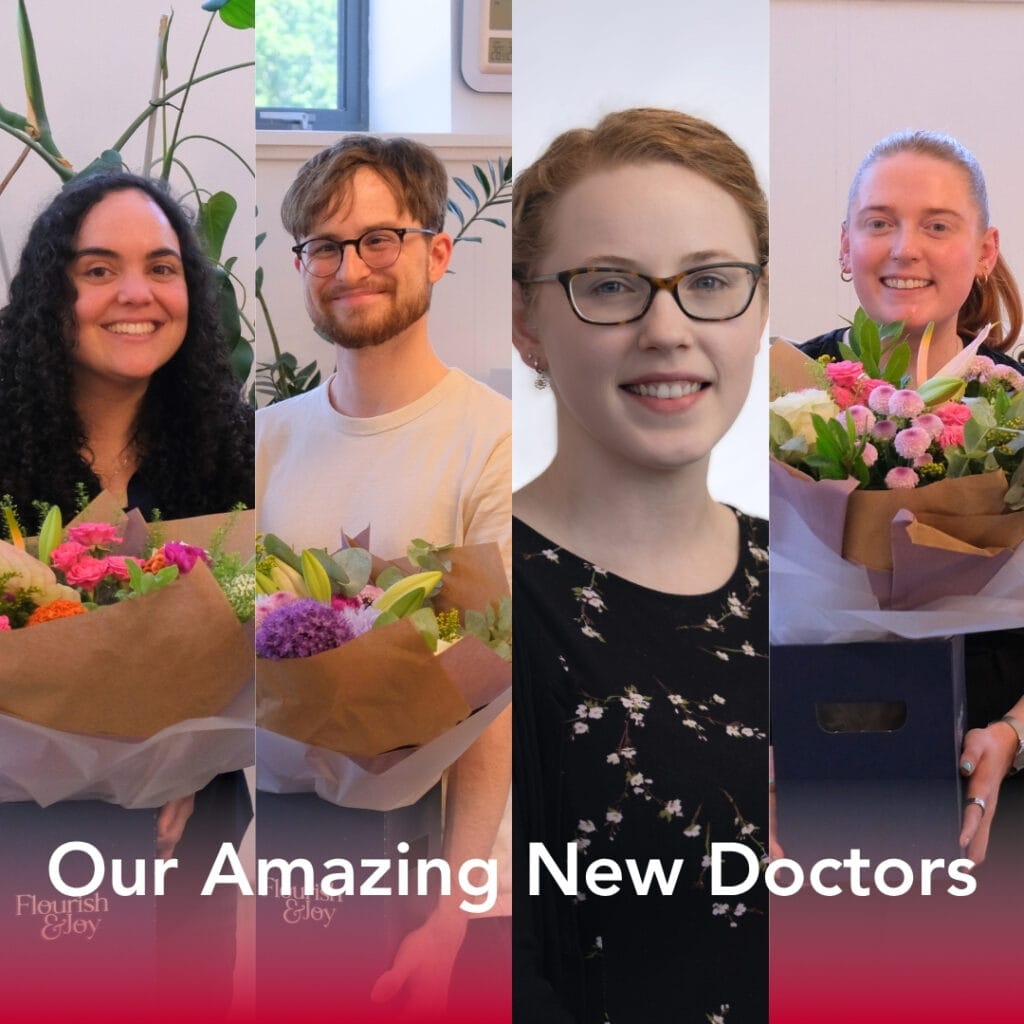
We recently celebrated FOUR of our colleagues completing their PhD’s. A doctorate in any area is no small achievement. It requires years of perseverance, resilience and passion. To celebrate their achievement we asked each colleague to share a little about their research and and what they’ve learned beyond the science.
“I did my EngD as part of the Centre for Doctoral Training in Applied Photonics and was hosted by Fraunhofer CAP and the University of Strathclyde. My research focused on developing a system capable of gas sensing at ranges up to ~80 m, using stand-off detection enhanced by Raman spectroscopy, ultraviolet laser excitation and single-photon detectors. Hydrogen was the primary gas of focus. This research demonstrated successful results by correctly identifying the species, concentration and position of present gas clouds.
It was without a doubt the most challenging experience of my life, but also the most rewarding. The research was really interesting, and I am proud to have been a part of this work and all I achieved throughout my EngD.”
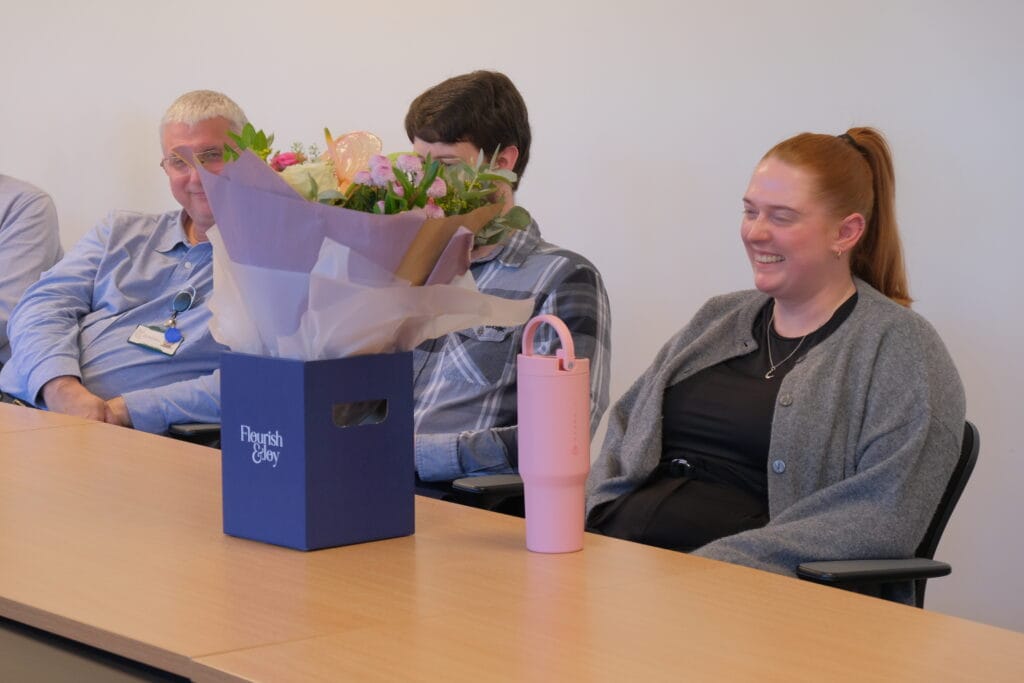
“I did my PhD at the university of Strathclyde in the lab of Professor Alan Kemp. This lab specialises in high power lasers; specifically Ti:Sapphire lasers and my area of focus, diamond lasers. I researched the feasibility of using the Raman effect in diamond to amplify existing laser sources in the eye-safe range (1.5-1.6 µm) so called due to being an area where the eyes can be exposed to more light before getting damaged. This led to the proof-of-concept setup of a diamond master oscillator power amplifier or D-MOPA and its optimisation, which was the core investigation of my thesis.
I wouldn’t trade any of my experience for the world. Despite working through COVID, dealing with lab setback, and balancing a full time job with writing, my love for science always triumphed. Completing my PhD has given me a great range of skills and confidence in my ability to continue growing and learning.”
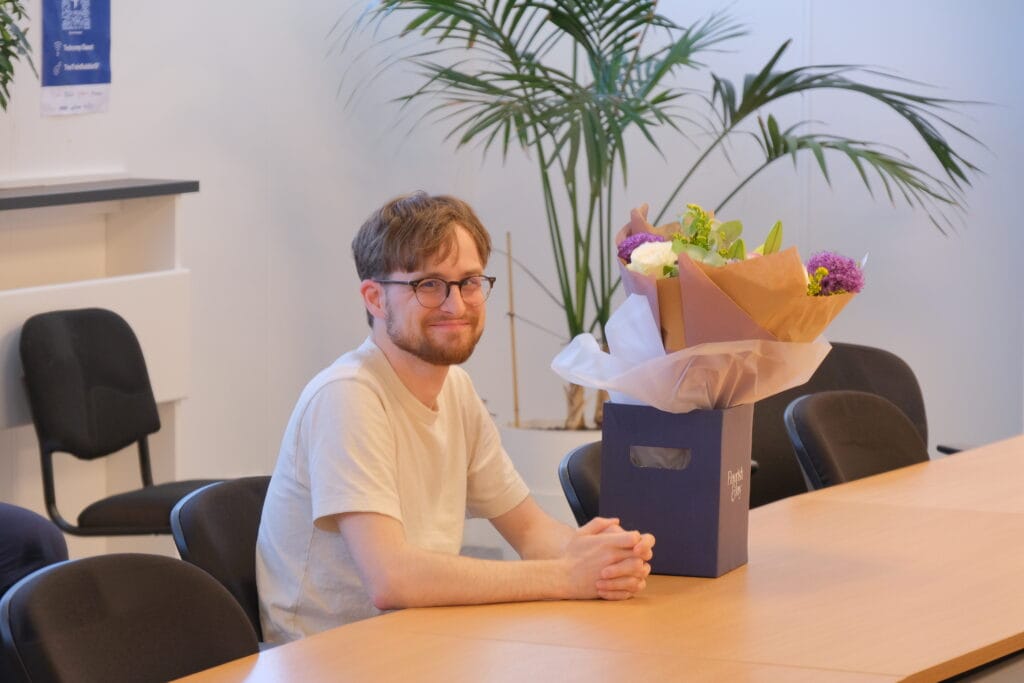
“I did my PhD at the University of St Andrews, under the supervision of Professor Graham Turnbull and Professor Eli Zysman-Colman. My research was focused on studying different types of light-emitting molecules (fluorescent, phosphorescent, and TADF) for application in sensors to detect explosives. Using spectroscopy techniques, including the FS5 Spectrofluorometer, I investigated how explosive compounds interact with light-emitting molecules to improve sensor sensitivity and performance.
My PhD was partly funded by Edinburgh Instruments and I had the chance to visit the company a few times during this period. I still remember how much I enjoyed the atmosphere at the company, something that matters a lot to me. That is why I’m so happy to now be working here! The team is super friendly, the vibe is great, and I get to do what I enjoy most: work with spectroscopy every day.”
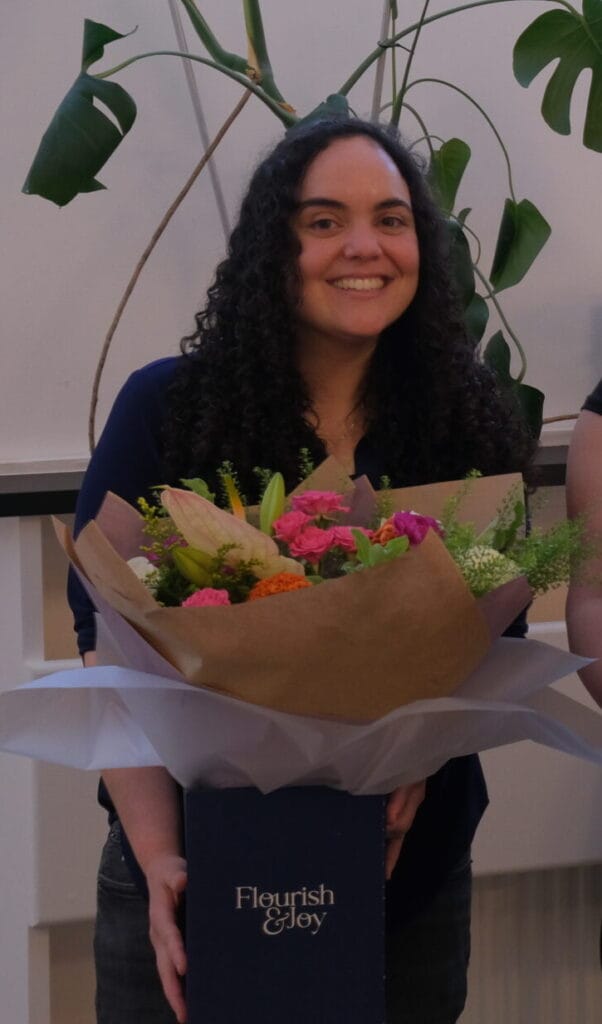
“My PhD focused on developing time-resolved Raman spectroscopy and imaging methods. Working with an industry partner, I used novel single-photon sensor technology to detect extremely faint chemical signals, even in highly fluorescent environments where conventional approaches struggle. My research explored how this technology could be integrated into commercial instruments and applied to areas such as biomedical research and diagnosis of liver disease.
Alongside my research, I was fortunate to receive a scientific outreach scholarship. This meant I could give public lectures and teach at events such as the Caithness Science Festival. Through these activities, I shared my passion for science with a wider audience, making it more accessible and encouraging people from all backgrounds and abilities to see that science is for everyone!”
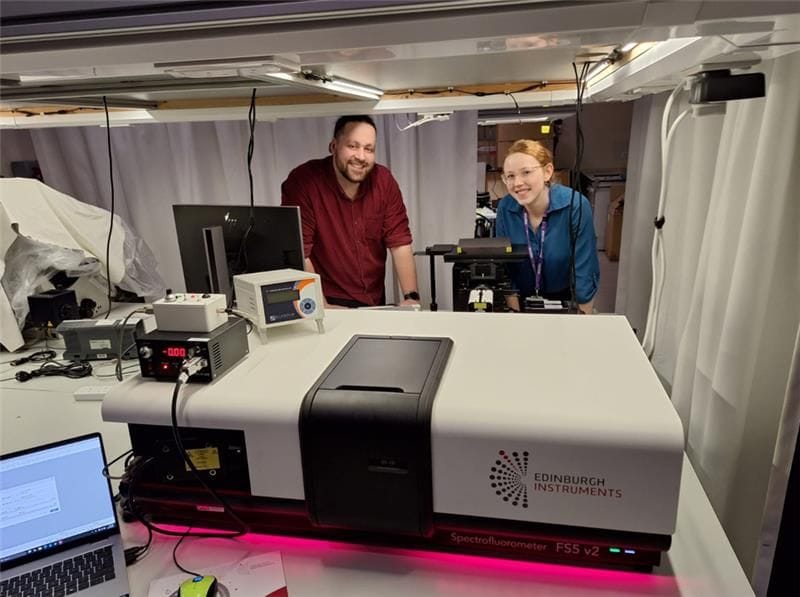
We’re incredibly proud of Ellis, Pierre, Michele, and Heather for reaching this milestone and bringing their expertise to Edinburgh Instruments! We hope learning about their journeys has provided some inspiration for your own goals, or brought back fond memories of your own PhD.