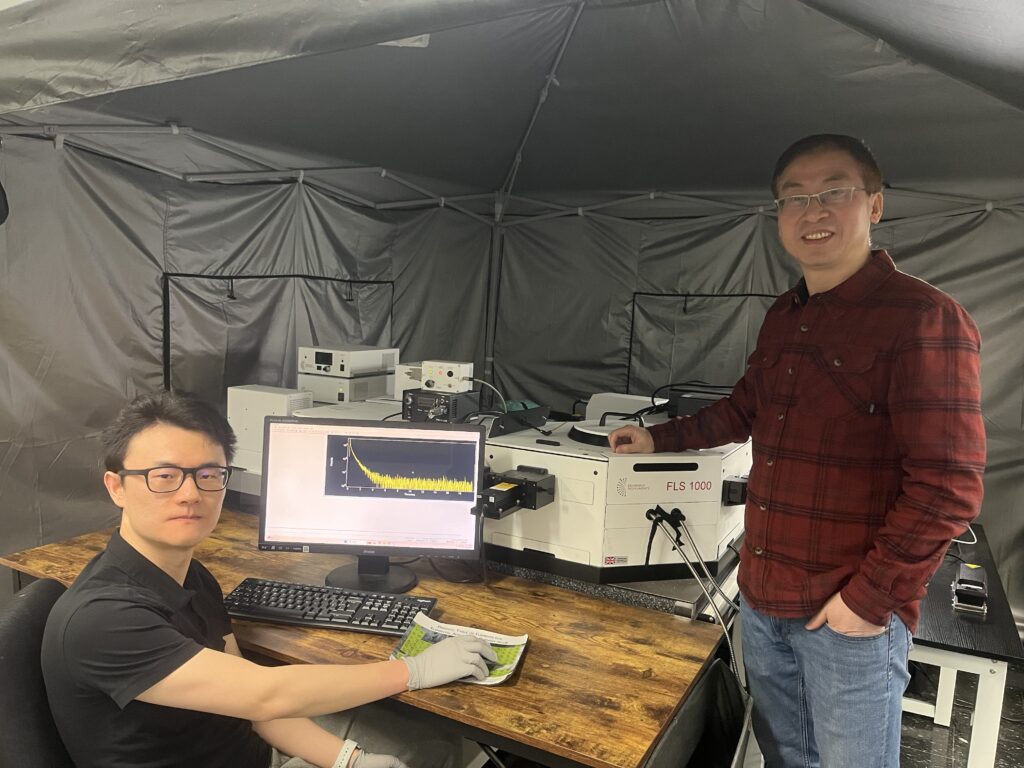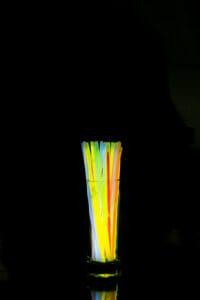
Professor Yuanbing Mao leads the Multifunctionalized Applications of Oxides (MAO) Research Group at the Illinois Institute of Technology (Figure 1). His group focuses on the design and development of advanced nanomaterials, particularly multifunctional metal oxides, with the aim of achieving novel properties for next-generation applications in optoelectronics, energy conversion/storage, and sustainability.
Prof. Mao’s research spans synthesis, structural control, and optical characterisation of nanomaterials and inorganic phosphors. These materials underpin light-based technologies including device screens, optical data storage, radiation detection, medical instruments, anticounterfeiting, and environmental sensing. The MAO team have recently developed ultraviolet persistent phosphors, broad-spectrum multimodal phosphors, and near–infrared emitters with outstanding thermal stability. Motivated by the shift from 20th-century electronics to photonics (what he calls the “century of the photon”), Prof. Mao designs materials to meet modern demands for efficient, tuneable, and persistent light emission.
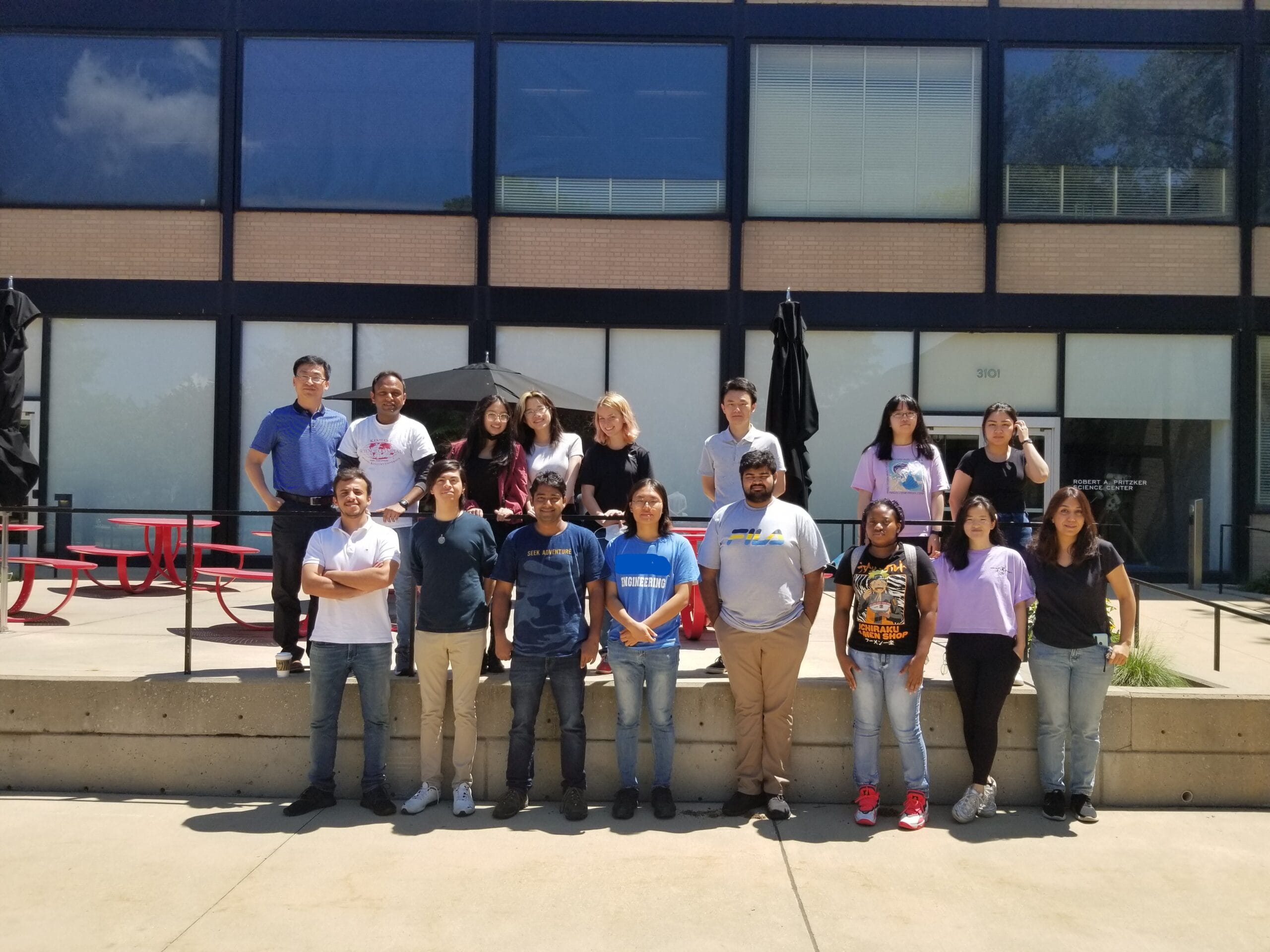
Figure 1. MAO research group at Illinois Institute of Technology.
The MAO group deploys an array of experimental techniques to drive their wide-ranging research, from synthesis to spectroscopic and microscopic characterisation. Photoluminescence (PL) spectroscopy is an integral part of their work including advanced techniques such as radioluminescence, upconversion, persistent luminescence, thermoluminescence, and optically stimulated luminescence.
To meet these experimental demands, Prof. Mao relies on the Edinburgh Instruments FLS1000 Photoluminescence Spectrometer (Figure 2). He notes that its modular design, research-grade performance, and versatility make it a central analytical tool in his optical materials lab.
“I chose Edinburgh Instruments mainly due to FLS1000 photoluminescence spectrometer’s high modularity, capability for powder samples, ultimate sensitivity and versatility in steady-state and time-resolved photoluminescence research.”
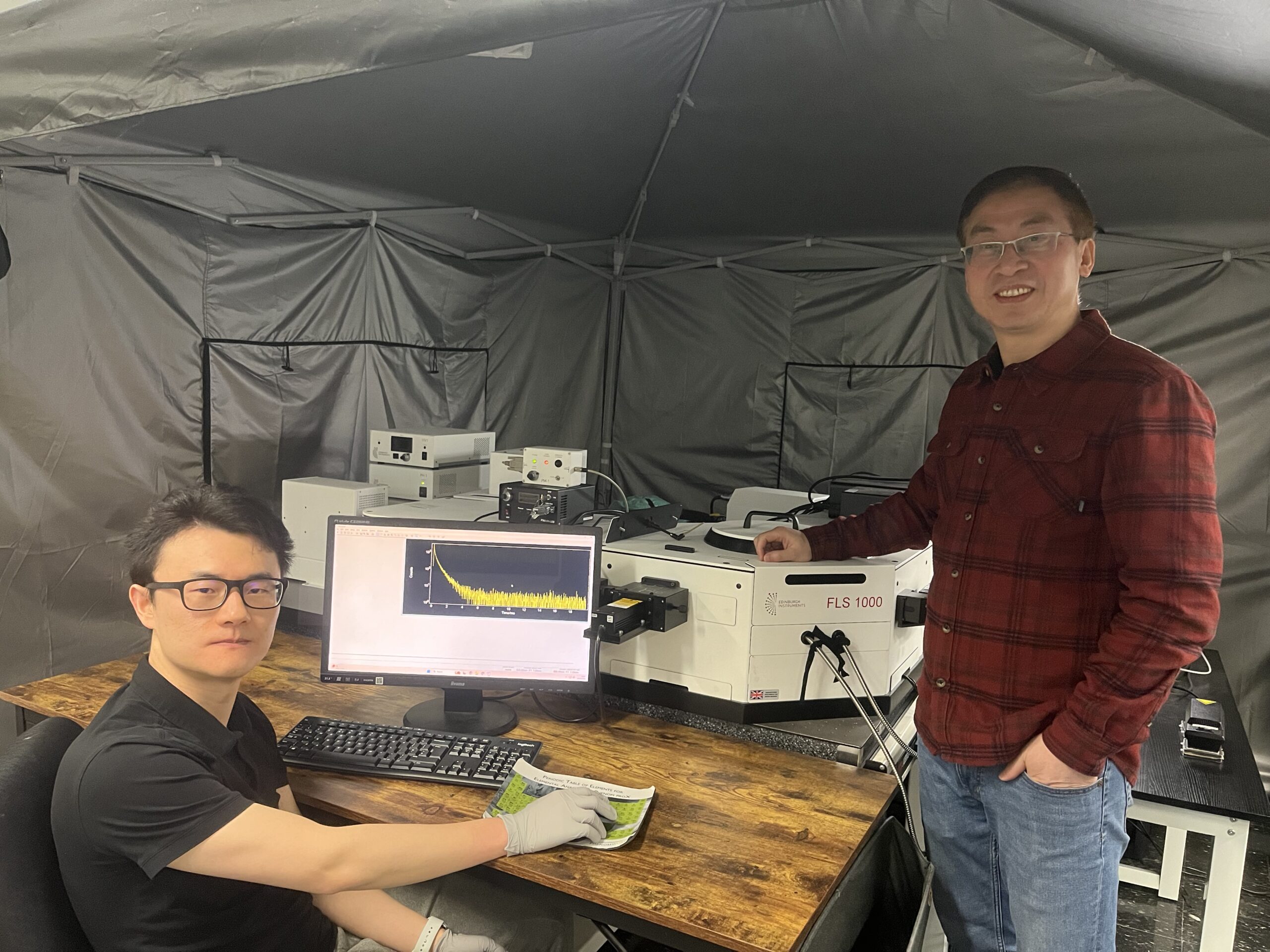
Figure 2. FLS1000 spectrometer in the MAO lab.
Thermal quenching, where emission efficiency drops with increasing temperature, is a major challenge for phosphors used in lighting, display, and sensing applications. The MAO group works to overcome this limitation by exploring materials with negative thermal expansion (NTE), referring to abnormal volume contraction along with increasing temperature, which exhibit unusual anti–thermal quenching behaviour.
Using the FLS1000 coupled with a Linkam heating stage, the team conducted temperature dependent PL measurements of NTE-based phosphors up to 848 K (Figure 3)1. These experiments enabled them to monitor how temperature-dependent structural changes influence luminescence emission and to investigate the mechanism behind anti-thermal quenching.
These insights advance phosphor design for applications such as luminescent thermometry, high intensity lighting, lasing materials, automotive displays, and aerospace instrumentation.
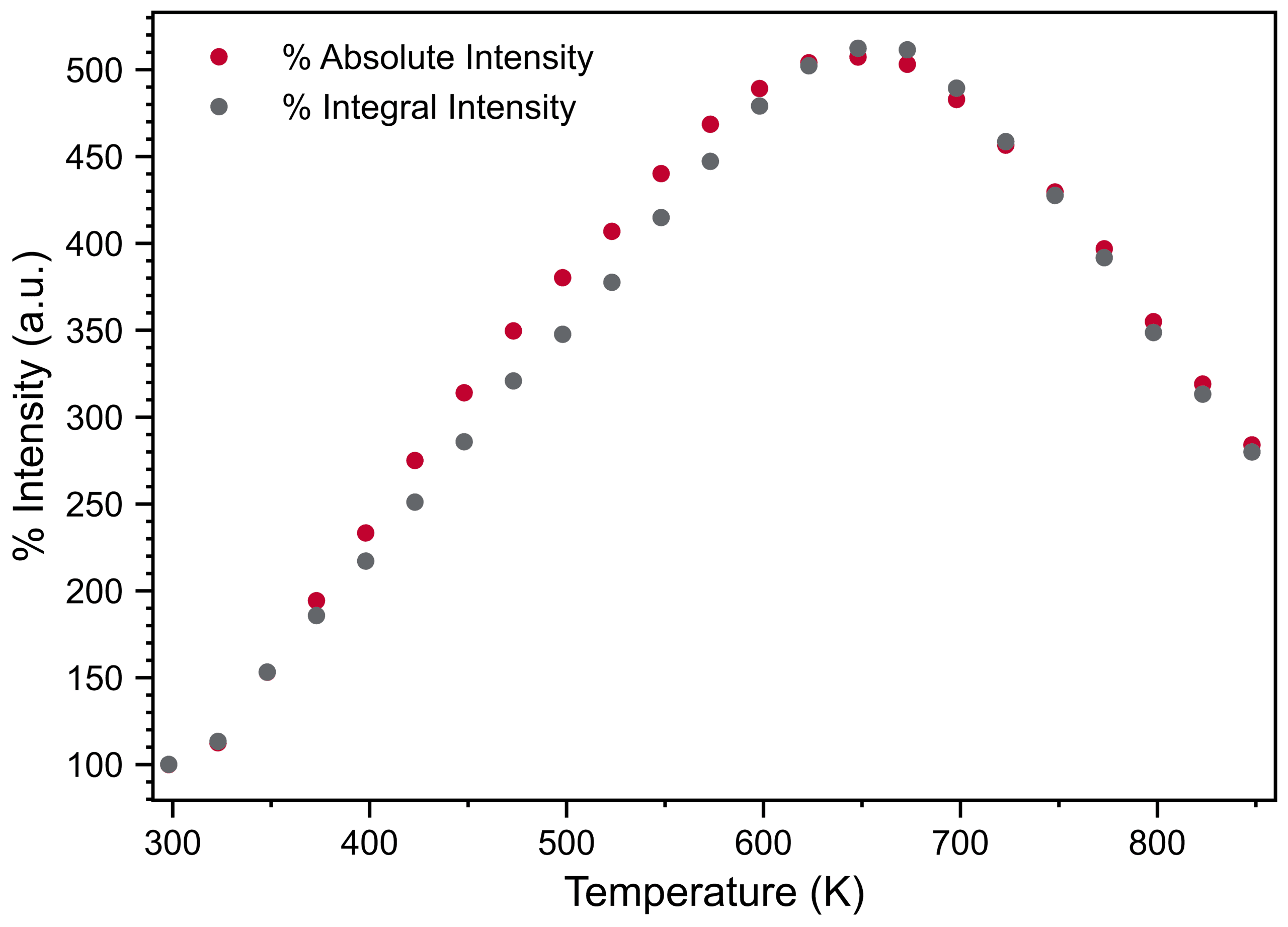 Figure 3. Temperature-dependent absolute and integrated intensities of Eu3+ emission at 613nm from Sc2MO3O12:Tb3+,Eu3+. Data provided by Prof. Yuanbing Mao.
Another focus of the MAO Group is optically stimulated luminescence (OSL), a process where preirradiated materials emit light when stimulated with lower energy photons. OSL materials are attractive for emerging optical data storage (ODS) technologies due to their operation at room temperature, ultrahigh storage capacity, long lifetimes, low power consumption, rewritability and erasability.
The FLS1000 plays a crucial role in enabling this research with measurements of OSL and thermally stimulated luminescence (TSL) decays. Using the FLS1000, Prof. Mao’s team demonstrated how tailored dopants in systems with Ca3Ga4O9–based host as one example significantly increase storage performance, offering a promising strategy for next generation optical memory devices (Figure 4)2
“The compact, user-friendly Edinburgh Instruments FLS1000 Photoluminescence Spectrometers designed with high-performance, research-grade flexibility, modular versatility, and full automation provides the perfect photoluminescence solution for our exploration of desirable optically stimulated luminescence materials.”
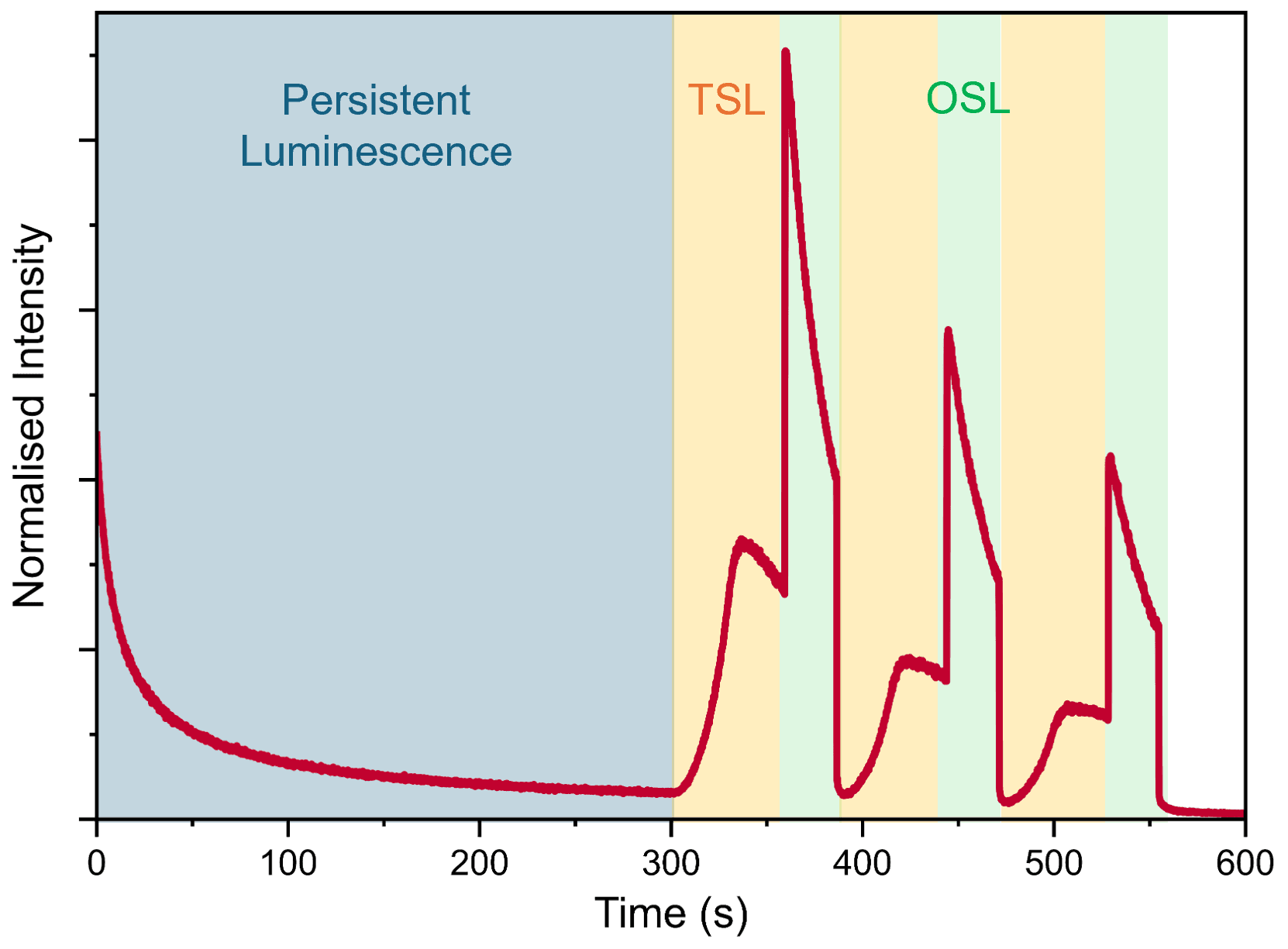
Figure 4. Synergistic behaviour of thermally stimulated luminescence (TSL) and optically stimulated luminescence (OSL) of Al3+-substituted Ca2.985Ga4O9:0.5%Tb3+. Persistent luminescence (PersL) was captured after initial excitation at 254 nm for 5 min. TSL by 323 K stimulation was recorded by heating the sample from room temperature to 323 K at 50°Cmin−1 maintained for 30 s and cool to room temperature at the same rate. Synergistic OSL decays were acquired after turning on a 980 nm laser during the cooling period for 30 s. Data provided by Prof. Yuanbing Mao
Prof. Mao sees the field accelerating rapidly as more researchers explore inorganic phosphors along with nanosized samples for lighting, displays, energy harvesting, temperature sensing, and photonic data technologies. Achieving better luminous efficacy, colour quality, and thermal stability will require continued innovation in both material design and optical characterisation capabilities.
According to Prof. Mao, the future of modern phosphor research depends on user–friendly, reliable photoluminescence spectroscopy systems with both steady state and time resolved capabilities. The FLS1000 platform from Edinburgh Instruments will remain essential in helping the MAO group, and the broader field, push boundaries in photonic materials research.