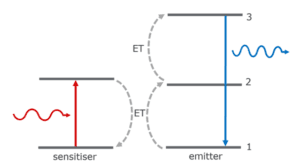
Dr. Lewis MacKenzie, a Royal Society of Chemistry and Chancellors Research Fellow at the University of Strathclyde, Glasgow, is driving groundbreaking research in optical nanotechnology, with a particular focus on upconversion nanoparticles (UCNPs) for biomedical applications. These specialised nanoparticles have the unique ability to convert low-energy light into higher-energy emission, enabling advanced imaging and diagnostic techniques in medicine.
By absorbing near-infrared (NIR) light (low energy) and emitting visible or ultraviolet light (higher energy), UCNPs penetrate deeply into tissues with minimal autofluorescence to deliver clear images for in vivo applications. Their stability and biocompatibility also make them ideal for long-term use, avoiding photobleaching and reducing toxicity. Other biomedical applications of UCNPs include techniques that combine drug delivery with phototherapy techniques and targeted delivery systems for drugs, genetic materials or photosensitisers.
Dr. MacKenzie’s team are interested in all aspects of UCNP research. They will synthesise materials, optimise them and apply them to biological systems.
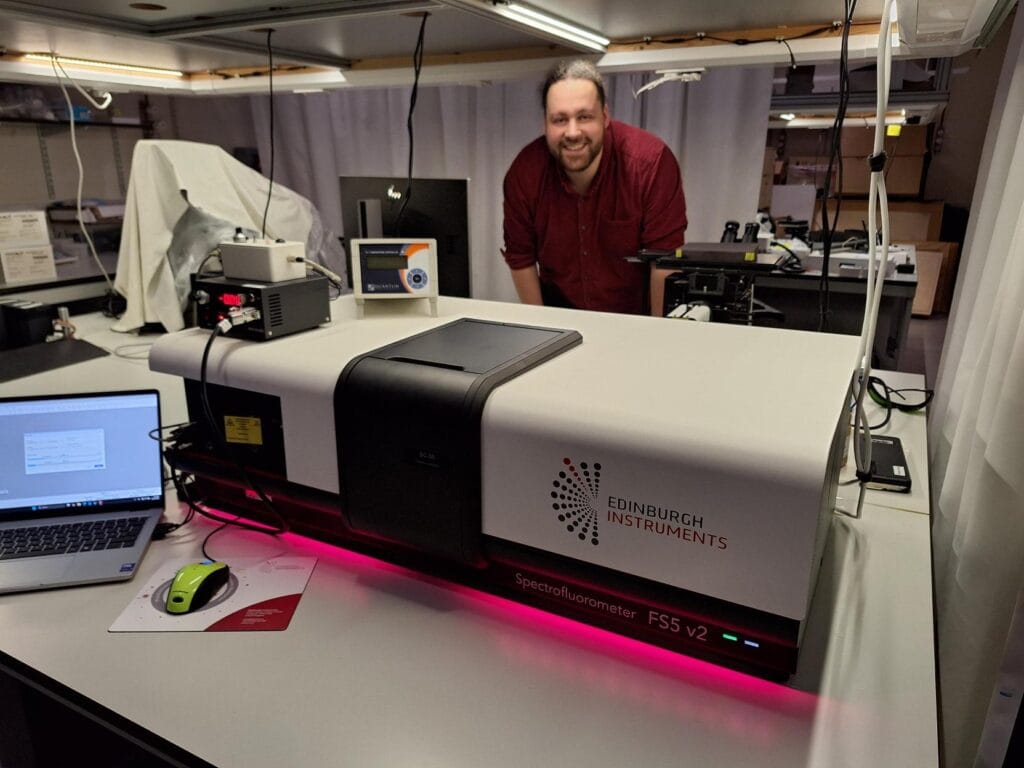
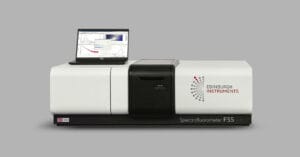
Recently, Dr. MacKenzie had an Edinburgh Instruments FS5 Spectrofluorometer installed in his lab. “For upconversion research, the FSS is going to be a total game changer.” Dr MacKenzie said. The compact, modular system allows full optical characterisation of nanoparticles while remaining space-efficient and upgradeable.
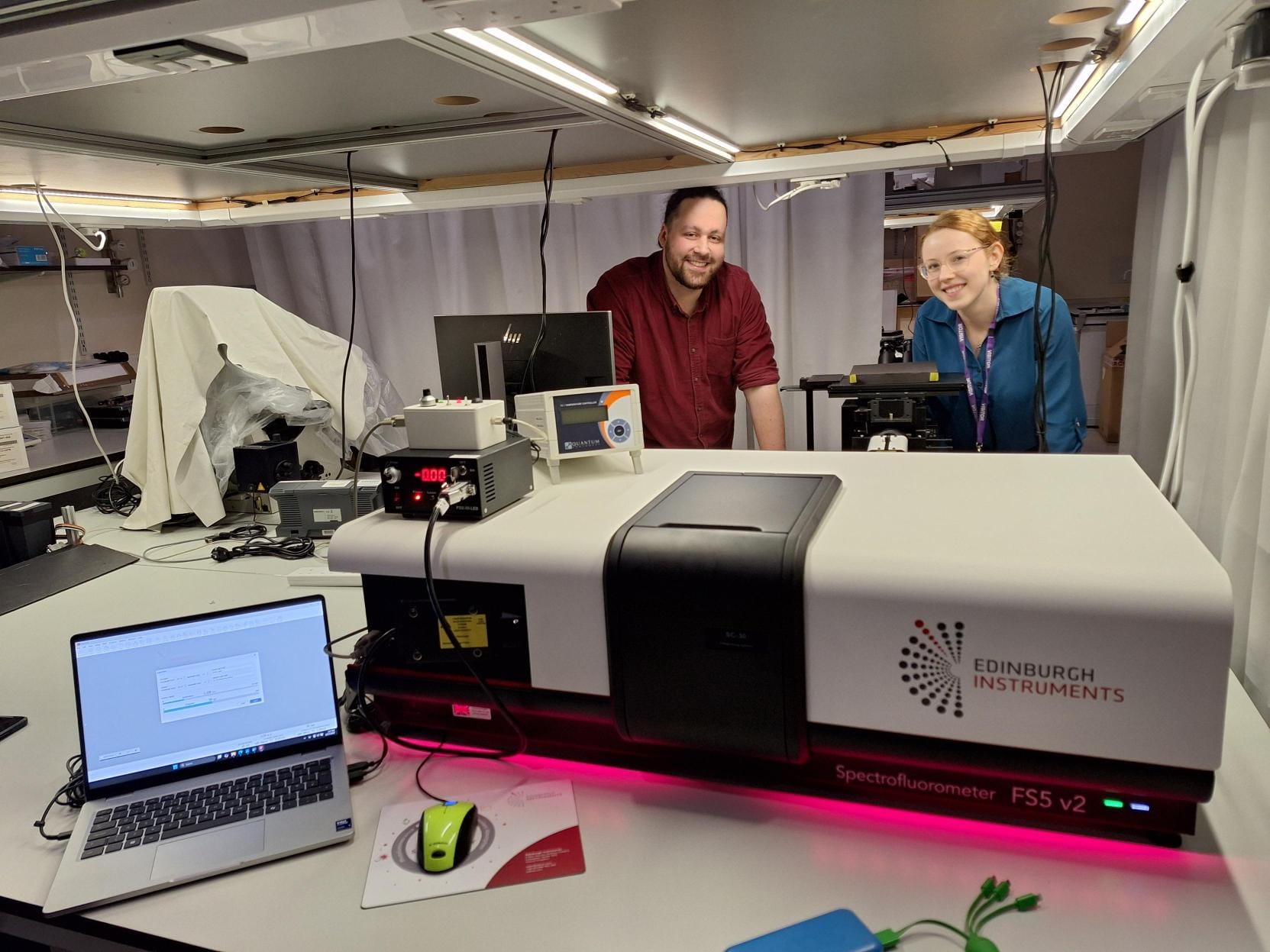
Previously, the group had been using a homemade spectrometer with limited features or travelling to Germany to carry out analysis of their UCNPs. Their new Edinburgh Instruments FS5 offers a remarkable increase in sensitivity, several orders of magnitude higher and allows lifetime measurements of upconversion nanoparticles – a specialist measurement in addition to the standard absorption and emission measurements.
Looking to the future, Dr MacKenzie is already planning to take advantage of the modular flexibility of the FS5. The system allows upgrades to be seamlessly integrated at any time, ensuring long-term value for research programmes. The MacKenzie group is already interested in the MicroPL upgrade which transforms the FS5 to allow photoluminescence mapping and the plate-reader upgrade that will increase experimental throughput.
Dr MacKenzie speaks highly of his interactions when purchasing the spectrofluorometer from Edinburgh Instruments. From his initial enquiry all the way through to installation, he describes the experience as “a really nice journey as a customer,” highlighting the team’s responsiveness to custom needs such as additional filters and specialised upgrades.
We’re incredibly grateful to Dr MacKenzie for taking the time to speak with us. We can’t wait to follow his research and catch up with how the FS5 is transforming his work, for now you can watch the full interview with Lewis and our Installation Engineer, Heather.